How to Ensure Your HVAC System Meets Operational and Energy Goals
 May 31, 2026
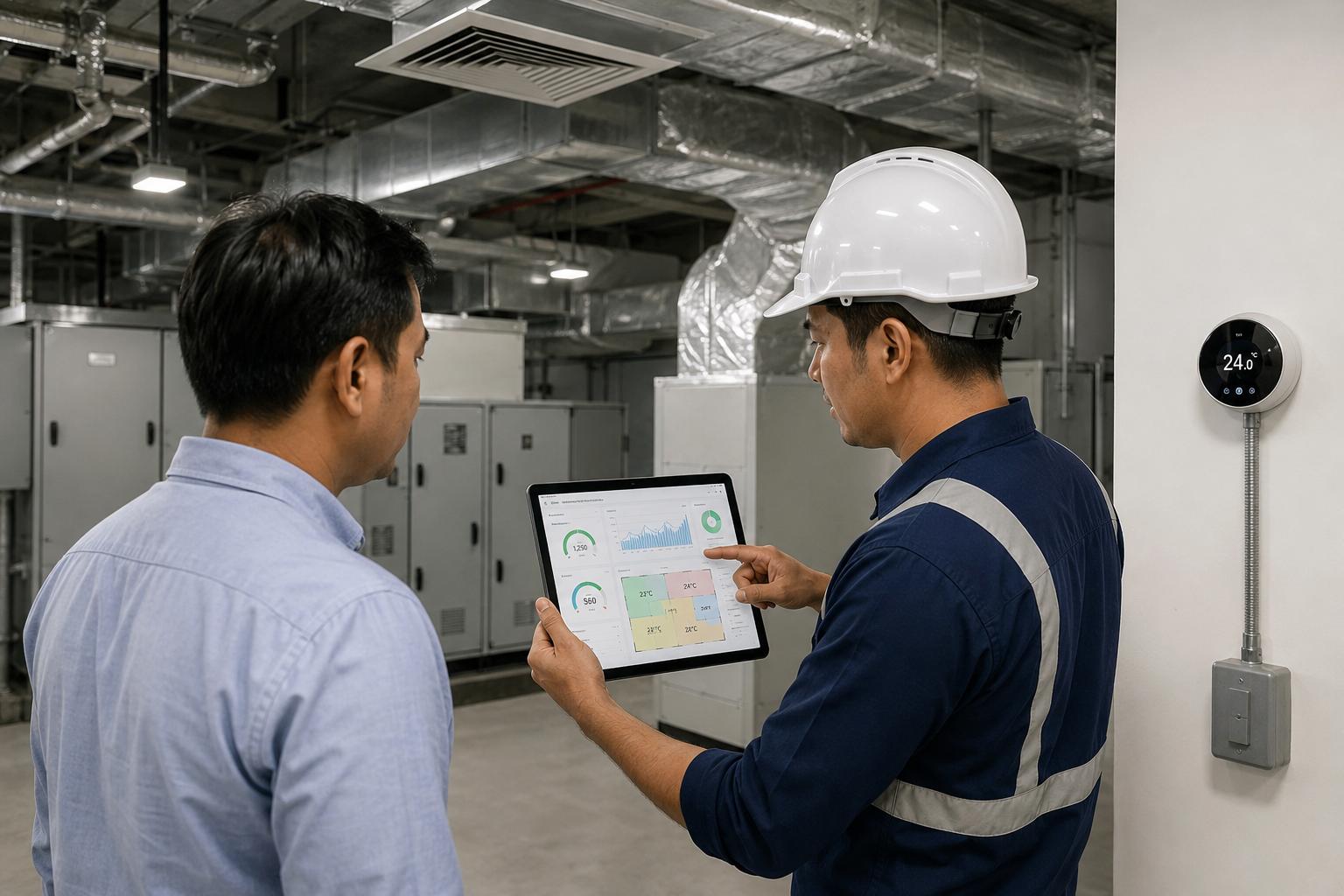
Overview
- Optimizing your climate system to meet operational and energy goals requires a proactive approach.
- This involves establishing regular filter replacements and professional tune-ups, upgrading to smart thermostats and independent zoning, adjusting setpoints, and utilizing variable-speed motors.
- Industrial PH delivers customized commercial and industrial HVAC solutions to maximize efficiency and long-term performance.
Beyond regulating temperature, a well-designed and maintained climate system directly drives facility efficiency. It ensures occupant comfort, protects critical equipment, minimizes energy consumption, and supports uninterrupted business operations.
That’s why it’s essential for facility teams to monitor performance, optimize system settings, maintain critical components, and identify opportunities for improvement. In this article, we’ll discuss how to ensure your HVAC system meets operational and energy goals.
Meeting these goals requires a system tailored, installed, and optimized for your specific facility needs. Industrial PH, a trusted HVAC contractor in the Philippines, delivers cooling solutions that boost performance, maximize efficiency, and ensure reliable operations for commercial and industrial clients.
Establish a Rigorous Maintenance Schedule
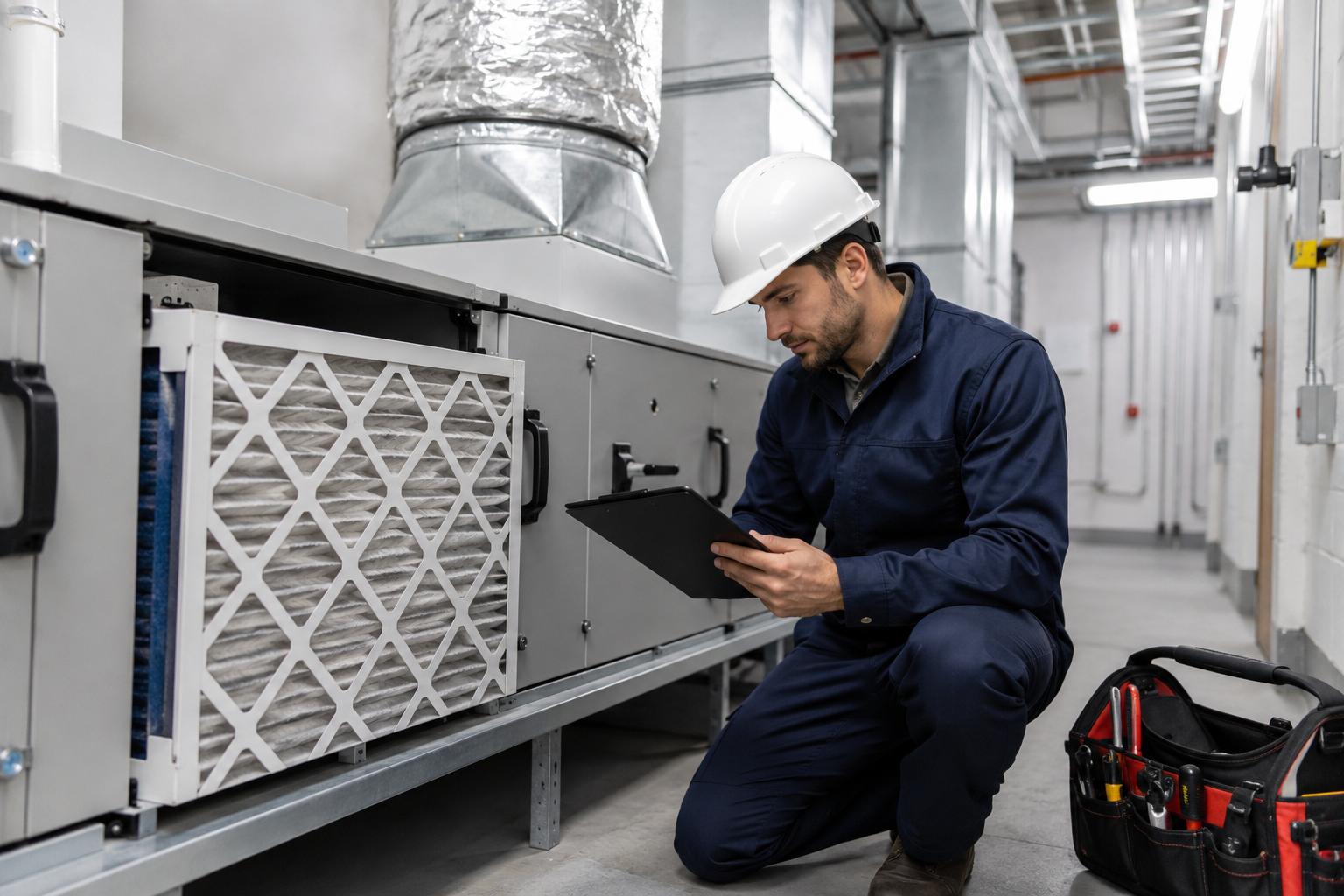
Before making major upgrades, evaluate how your HVAC system currently works. A system that appears functional may still be consuming extreme energy due to inefficient operation, inadequate airflow, outdated parts, or incorrect settings.
Filter Replacements
Air filters trap dust and debris that restrict airflow. Regular inspection and timely swaps prevent this resistance. Facilities facing high dust levels, heavy occupancy, or industrial processing require more frequent replacements to ensure the system breathes smoothly and operates efficiently.
Professional Tune-Ups
Basic tracking catches obvious faults, but certified technicians uncover hidden inefficiencies. A tune-up includes testing electrical connections, checking refrigerant levels, cleaning critical components, and replacing worn parts. Scheduling these checks before peak seasonal demand ensures your machinery handles heavy cooling loads without failing.
Ductwork Inspection
Perfectly functioning machinery underperforms if the distribution network is compromised. Leaks, loose connections, and poor insulation allow conditioned air to escape into building voids. Regular inspections to locate and seal these gaps ensure cooling capacity actually reaches occupied workspaces instead of being wasted.
Upgrade to Smart Controls
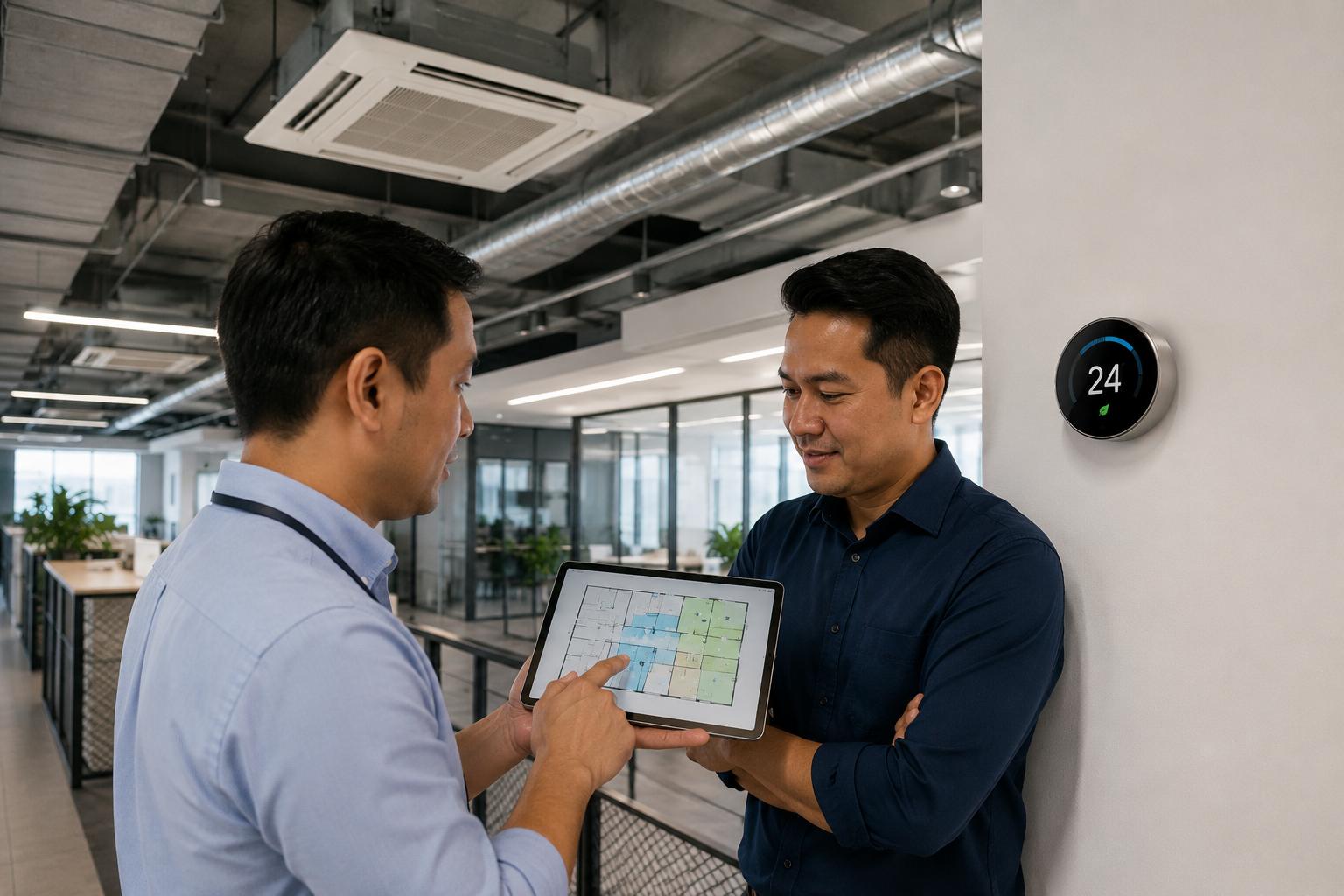
Modern HVAC performance relies not only on equipment quality but also on how the system is controlled. Advanced controls provide greater visibility and automation, allowing facilities to handle cooling based on actual operations.
Programmable/Smart Thermostats
Installing programmable or smart thermostats automates temperature adjustments based on your facility’s operational schedule.
Instead of running identical settings 24/7, you can reduce cooling in offices and meeting rooms during non-working hours and lower settings right before employees arrive. These devices also provide runtime data, helping facility teams identify unnecessary usage and optimize energy efficiency.
Zoning Systems
Implementing climate zoning divides a facility into separate, independently managed control areas. This allows cooling output to be directed precisely where it is needed rather than conditioning the entire building at a single level. For example, a low-occupancy storage area requires significantly less cooling capacity than a crowded office space, reducing energy waste while maintaining localized comfort.
Optimize System Operation
After improving maintenance practices and control systems, review how your HVAC equipment operates daily. Optimizing system operation involves adjusting key parameters, improving equipment responsiveness, and ensuring HVAC output matches changing demand.
Optimize Setpoints
Review your current temperature setpoints and determine whether they are appropriate for your facility’s usage requirements. Incorrect settings, such as maintaining unnecessarily low temperatures, can force HVAC systems to operate longer and consume more energy than needed.
To optimize setpoints, consider factors such as occupancy levels, equipment requirements, working schedules, and environmental conditions. You may also establish temperature ranges that maintain occupant comfort without placing excessive demand on cooling equipment.
Variable Speed Motors
Assess whether your HVAC equipment can adjust output based on changing cooling demands. Traditional fixed-speed motors typically operate at one output level, which can lead to energy waste when the facility requires less cooling capacity.
Upgrading to variable-speed motors allows HVAC components to automatically adjust their operation based on real-time requirements. During periods of high demand, the system can provide additional airflow, while during periods of low demand, it can reduce output to conserve energy.
Energy Audits and Benchmark Performance Tracking
Energy audits and performance tracking provide measurable insights into how HVAC systems consume energy, identify areas of improvement, and support better decision-making for future upgrades.
Start by reviewing energy consumption patterns, equipment runtime, maintenance records, and temperature performance. Compare current results against previous performance data to identify unusual changes. By establishing performance benchmarks, facility teams can determine whether HVAC adjustments are delivering improvements and identify when additional maintenance, repairs, or system upgrades are necessary.
Key Takeaway
Understanding how to ensure your HVAC system meets operational and energy goals requires a proactive approach. This includes regular maintenance, performance monitoring, optimized controls, and strategic system improvements.
Industrial PH provides dependable HVAC solutions to help commercial and industrial facilities achieve better efficiency, reliability, and operational control. With expertise in equipment design, installation, optimization, and maintenance support, we help businesses develop solutions aligned with their facility requirements and long-term energy objectives. Contact us today to learn more!