What Makes Cooling Costs So High in Philippine Facilities?
 March 29, 2026
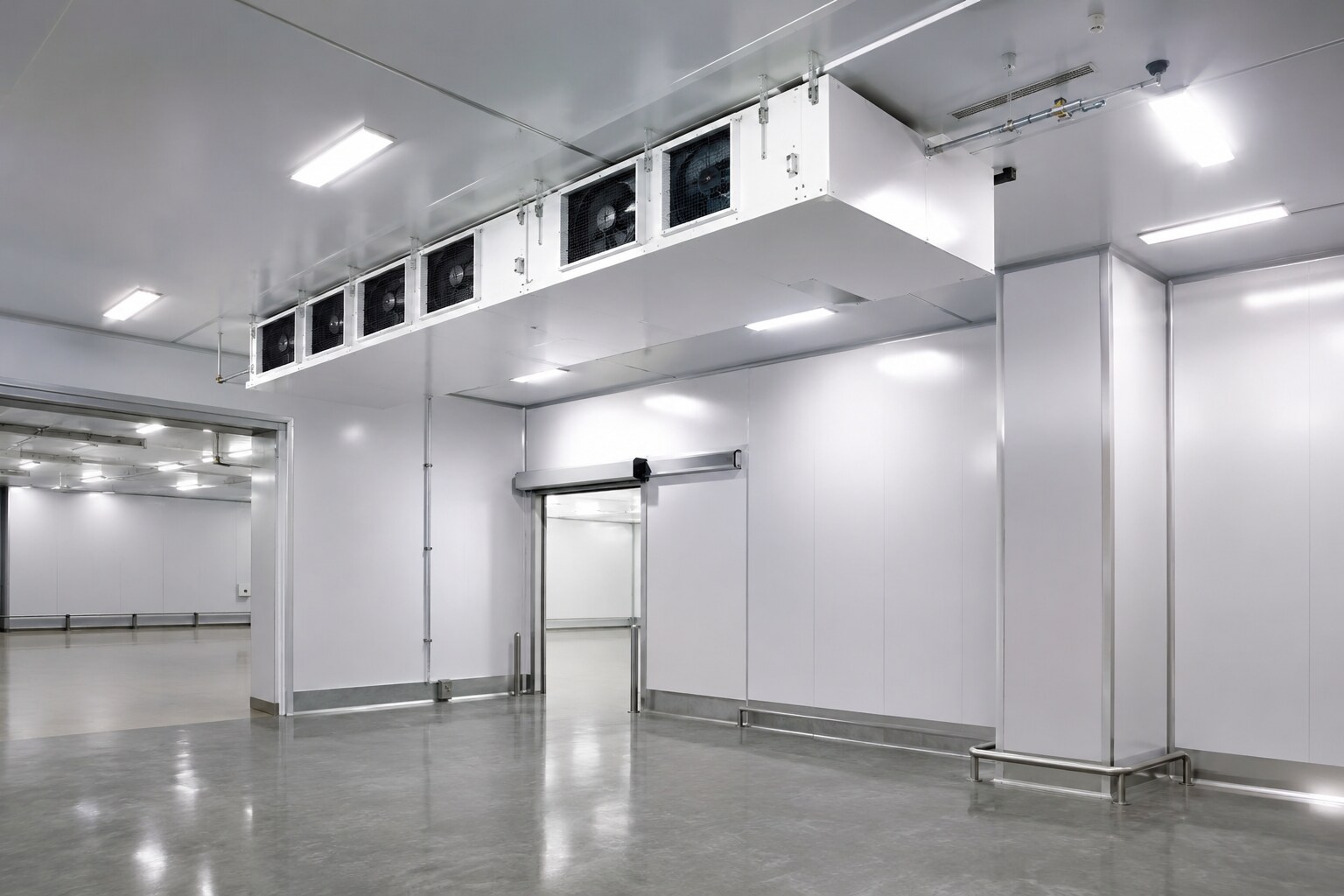
Why are cooling costs higher in Philippine facilities?
- High electricity rates
- Tropical climate and high humidity
- Inefficient infrastructure and technology
- Behavioral and design factors
- Inappropriate usage habits
Overview
- Rising cooling costs in Philippine facilities pose a major challenge for facility leaders due to high electricity rates.
- Inefficient equipment, poor infrastructure, building design, and improper usage habits further increase energy consumption and operational expenses.
- Understanding these factors allows facility teams to implement solutions like energy-efficient upgrades.
Rising cooling costs directly impact operational budgets. This has long been a challenge for facility managers and procurement officers, especially in the Philippines, where tropical heat and high humidity are constant. However, beyond weather conditions, several underlying factors contribute to higher cooling expenses.
Understanding why cooling costs are higher in Philippine facilities can help identify inefficiencies, optimize operations, and reduce overhead. By analyzing energy use patterns and system performance, facility teams can implement strategies, such as partnering with a reputable industrial chiller provider, to minimize cooling costs while maintaining productivity
High Electricity Rates
Philippine electricity rates are among the highest in Southeast Asia. In January 2026, industrial electricity prices remain high and can fluctuate significantly due to market changes. Monitoring energy consumption, optimizing system performance, and using a high-quality industrial chiller are essential to control operational costs without compromising cooling capacity.
Cooling system distributors like Industrial PH provide advanced industrial chillers with reliable cooling solutions for Philippine manufacturing. With electronic expansion valves (EEVs) that improve refrigerant heat absorption and optimized condensers that efficiently reject heat, energy consumption is reduced by up to 30% compared to standard units.
Tropical Climate and High Humidity
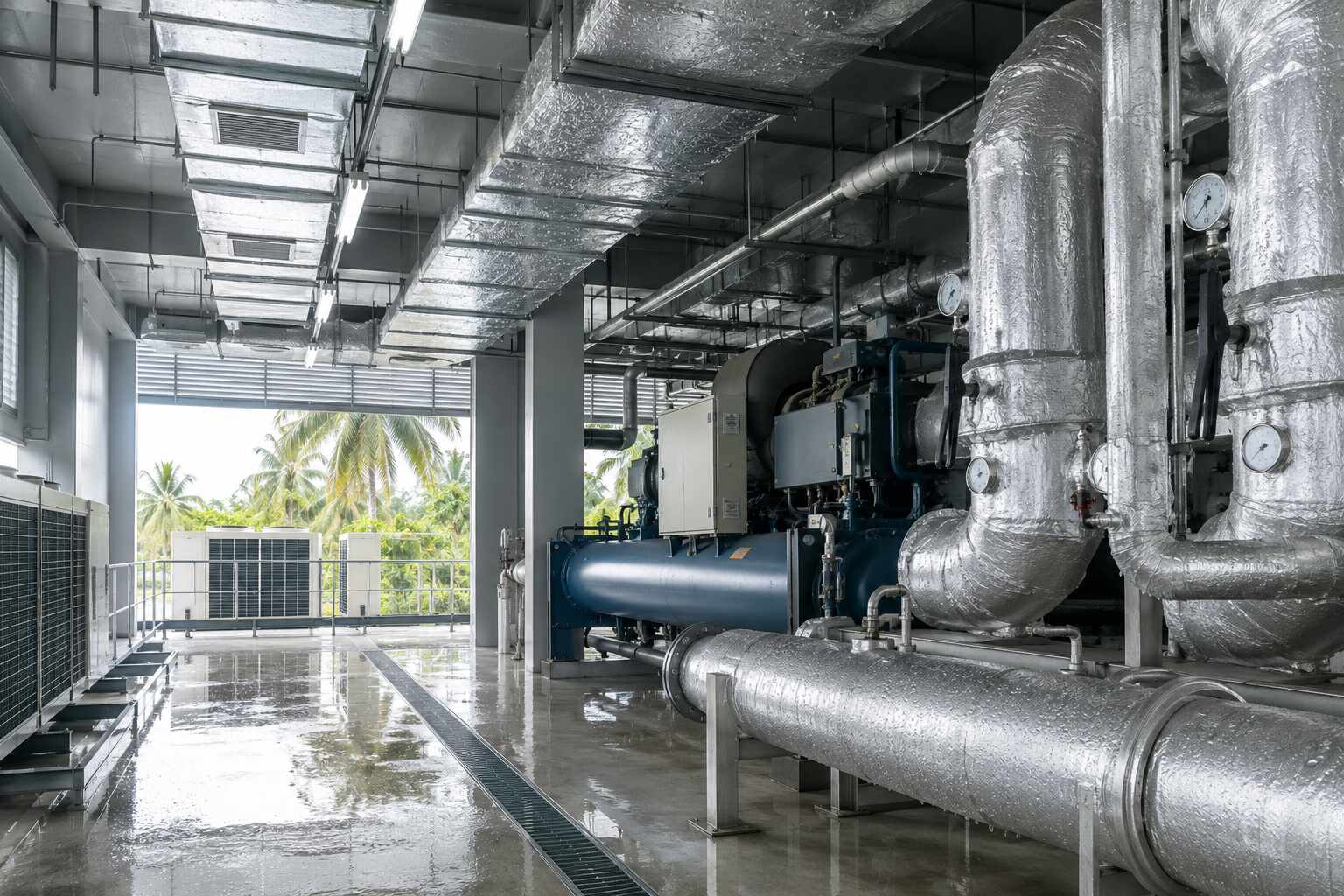 The tropical climate and high humidity in the Philippines place constant strain on cooling systems, forcing chillers and air conditioning units to work harder to maintain stable indoor temperatures. Excess moisture reduces heat-transfer efficiency and increases energy consumption.
Facility managers must account for these environmental conditions when selecting and maintaining cooling systems to ensure equipment can handle high heat loads while delivering reliable, long-term performance. Water-cooled chillers are particularly well-suited to the country’s climate, where average temperatures range from 26 to 32 °C and humidity levels reach 70–85%. They deliver 20–30% higher efficiency because cooling towers reject heat more consistently and are less affected by hot ambient air than air-cooled systems.
Inefficient Infrastructure and Technology
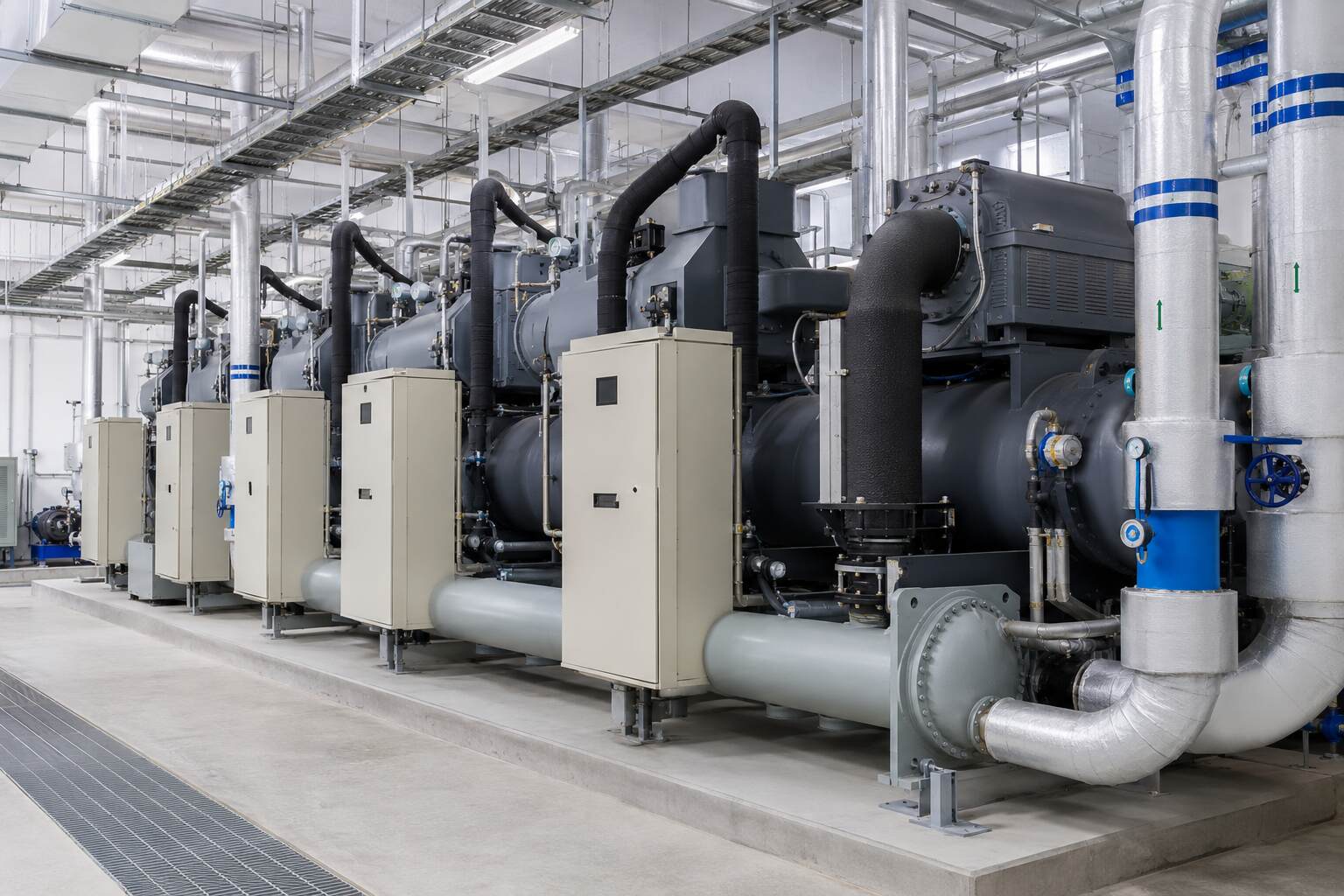 Aging chillers, undersized systems, and poorly designed ducting or piping force cooling equipment to operate longer and harder than necessary. These inefficiencies increase energy consumption and accelerate equipment wear and tear.
- Aging Chillers: Wear, fouling, and vibration reduce efficiency, disrupt refrigerant flow, and increase the risk of breakdowns.
- Undersized Systems: Struggle to meet cooling demand during peak loads, causing continuous operation and higher energy use.
- Poor Ducting or Piping: Creates airflow or pressure losses, forcing systems to work harder to deliver the same cooling output.
Regular maintenance, such as cooling tower cleaning, benefits water-cooled chillers the most, while properly sizing air-cooled chillers prevents overload during humid peak periods. Upgrading to systems with electronic expansion valves (EEVs) and variable-speed drives (VFDs) helps optimize performance for both types.
Behavioral and Design Factors
Overcooling, leaving doors and windows open, or setting temperatures lower than necessary increases energy use. Similarly, building design factors, such as poor insulation, excessive glass exposure, or a lack of shading, force chillers to work harder to maintain comfortable indoor temperatures. Facility managers and procurement officers must address these behavioral and design factors alongside cooling equipment upgrades to effectively control cooling costs.
Industrial PH’s chiller systems help prevent energy waste caused by these factors through smart and automated features. Programmable logic controller (PLC) panels and proportional-integral-derivative (PID) controllers maintain optimal setpoints and automatically adjust real-time loads to prevent overcooling and reduce human error.
Inappropriate Usage Habits
Inappropriate usage habits often occur during daily operations, such as inconsistent temperature adjustments, running chillers during off-hours, or failing to shut down equipment when not in use. Over time, these habits gradually increase cooling demand and energy consumption, which makes cost control more difficult to maintain.
User-friendly controls and proper staff training allow facilities to enforce consistent temperature settings, reduce overcooling, and achieve meaningful energy savings without constant supervision. PLC timers help prevent unnecessary runtime and wasted energy, while PID controllers help maintain preset temperature ranges.
Solutions Being Implemented
To manage rising energy expenses, facilities are turning to practical cooling solutions that lower power consumption without compromising operational requirements.
- Energy-Efficient Upgrades: Modernizing chillers with variable-speed drives, electronic expansion valves, and smart controllers.
- Passive Cooling: Implementing design strategies such as improved insulation, shading, reflective coatings, and natural ventilation.
Key Takeaway
Understanding why cooling costs are higher in Philippine facilities is essential for identifying inefficiencies and implementing cost-saving strategies. Working with a reliable industrial chiller provider can help facilities optimize performance and control costs effectively.
Industrial PH offers modern chillers with smart controls, proper maintenance support, and energy-efficient features that significantly reduce electricity consumption while maintaining reliable cooling performance.
Contact us to learn how we can help your facility save energy and lower cooling costs.