How to Identify and Address Cooling Inefficiencies in Large Facilities
 May 21, 2026
Overview
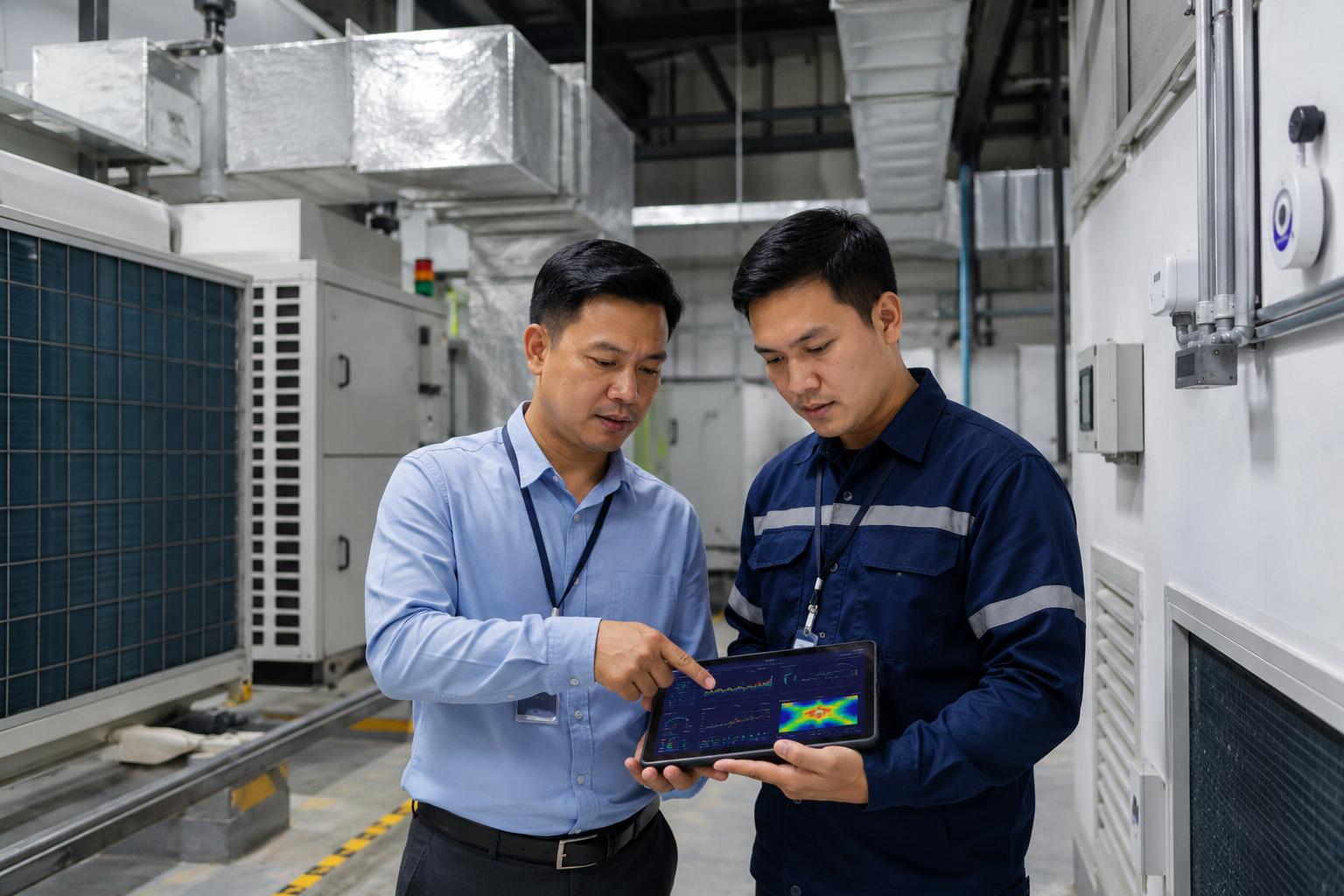
- Managing large-scale cooling requires a systematic approach to eliminate energy waste and equipment strain.
- Facility teams can identify and address cooling inefficiencies by using thermal mapping and performance KPIs, fixing airflow bypasses with containment strategies, deploying environmental sensor networks, and optimizing operations through adjusted setpoints and variable flow rates.
Achieving efficient facility cooling requires a precise balance of equipment performance, airflow, and operational demands. When any of these elements fail, businesses face immediate consequences: uneven temperatures, surging energy bills, and equipment strain.
As a trusted HVAC contractor in the Philippines, Industrial PH delivers advanced cooling solutions tailored for industrial plants, data centers, and commercial facilities to eliminate these operational headaches.
In this article, we break down how to identify and address cooling inefficiencies in large facilities to protect your equipment and your bottom line.
Perform Audits and Benchmarking
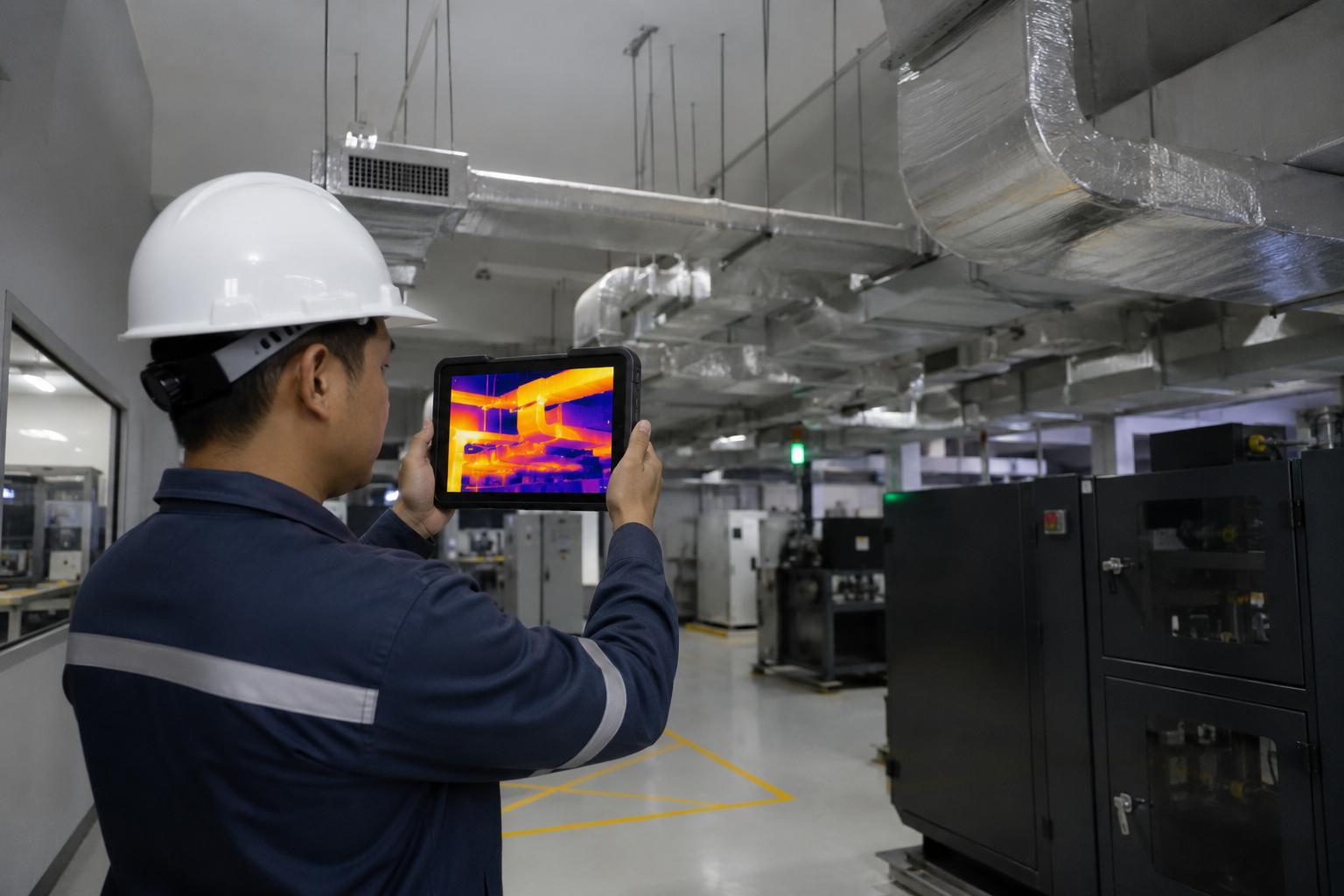
Audits and benchmarking help facility teams identify where energy is being wasted, where cooling demand is highest, and which areas require improvement. A structured assessment provides a clearer basis for deciding whether the issue requires operational adjustments, airflow improvements, or equipment upgrades.
Thermal Mapping
Create a thermal map of your facility to identify temperature differences that may indicate cooling inefficiencies. Use infrared cameras or temperature monitoring tools to capture heat variations across critical areas, including workspaces, equipment zones, server rooms, production areas, and storage locations.
Conduct measurements during different operating conditions, such as peak working hours and periods of lower activity. Compare the collected temperature data with your facility’s required conditions to identify areas receiving insufficient cooling or where cooling capacity is being wasted.
Assess KPIs
Important metrics may include energy consumption, cooling output, equipment runtime, temperature consistency, humidity levels, and system efficiency ratings. Compare current performance data with historical records or industry benchmarks to determine whether your system is becoming less efficient over time.
For example, increasing energy consumption without a corresponding increase in cooling demand may indicate declining equipment performance or operational issues.
Analyze Airflow and Containment
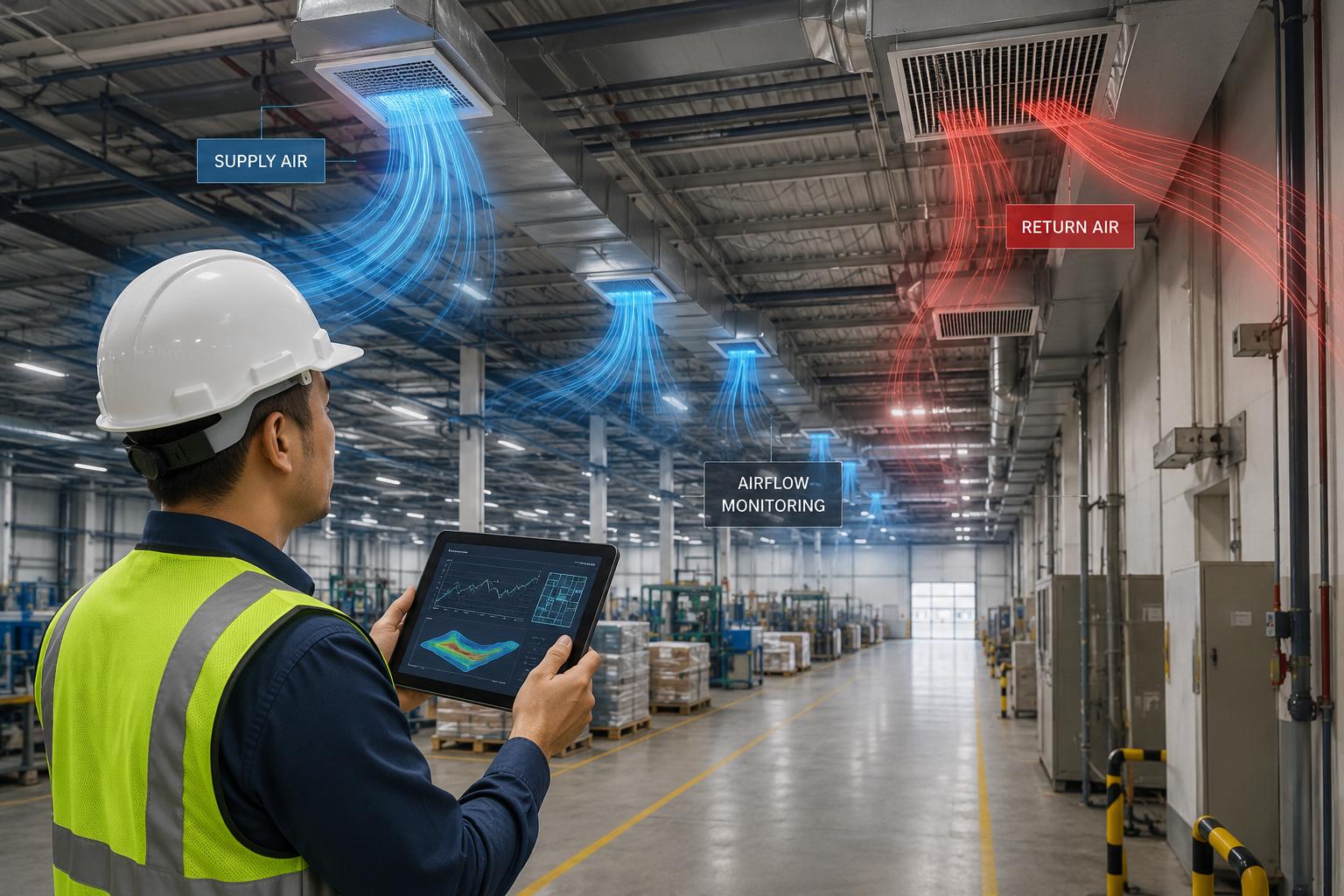
In large facilities, airflow problems often occur when air escapes before reaching intended areas or when warm air mixes with cooled air. Improving airflow management requires understanding how air moves throughout the facility and controlling conditions that reduce cooling effectiveness.
Detect Bypass & Recirculation
These issues commonly occur due to gaps, poor equipment placement, blocked pathways, or improper return air positioning.
Use airflow measurements, smoke tests, or temperature readings to observe how air travels through space. Check whether supply air reaches the intended areas and whether return air carries unwanted heat back into the system. Identifying these airflow problems helps determine whether adjustments are needed in ductwork, equipment positioning, or airflow controls.
Implement Containment
Improve cooling efficiency by separating supply air from warm return air, especially in facilities with concentrated cooling demands. Containment strategies help prevent cooled air from mixing with warmer air before it reaches equipment or occupied areas that require temperature control.
For example, facilities with server rooms or high-density equipment areas can use containment methods to create controlled airflow paths. This allows cooling systems to focus their capacity where needed rather than compensating for unnecessary heat mixing.
Manage Floor Space
Review how equipment, storage areas, and operational zones are arranged because physical layouts directly affect airflow performance.
Poor space planning can block air movement, restrict return air pathways, or create areas where cooling cannot circulate effectively. Maintain sufficient clearance around cooling equipment, avoid blocking supply vents, and organize heat-generating equipment away from temperature-sensitive areas.
Deploy Environmental Monitoring
Instead of responding only after temperature issues occur, environmental monitoring provides early indicators of performance problems. By collecting real-time information, managers can make informed adjustments and prevent inefficiencies from affecting facility operations.
Sensor Networks
Install temperature, humidity, airflow, and equipment performance sensors throughout critical areas of the facility. Place sensors in locations where cooling conditions are most important, such as production areas, equipment rooms, server environments, and high-occupancy spaces. You may also use multiple monitoring points instead of relying on a single temperature reading, providing a more accurate picture of how cooling is distributed.
Data Logging
Data logging allows facility teams to review temperature trends, equipment runtime, energy usage, and cooling demand throughout different operating periods. Analyze this information to determine when inefficiencies occur and what factors contribute to them. For instance, consistent temperature increases during specific hours may indicate capacity constraints or operational changes that affect cooling demand.
Optimize Hardware and Operations
After identifying inefficiencies, focus on improving system operation before considering major replacements. Small adjustments to equipment settings and operating strategies can significantly improve cooling efficiency.
Raise Set Points
Review your cooling temperature settings and determine whether they can be adjusted without affecting operational requirements. Lower temperature settings usually increase energy consumption because cooling equipment must work harder to maintain colder conditions. Even small adjustments can reduce energy demand while maintaining acceptable comfort and equipment performance.
Vary Flow Rates
Adjust airflow and cooling output based on actual demand rather than maintaining maximum output at all times. Variable-speed drives and smart controls allow cooling equipment to adjust output based on current conditions, preventing systems from consuming unnecessary energy during periods of lower cooling demand.
Leverage Free Cooling
Utilize naturally available cooling conditions whenever possible to reduce dependence on mechanical cooling systems. Free cooling uses cooler ambient air or environmental conditions to assist with temperature management rather than relying entirely on compressors. Evaluate whether your facility’s location, operating schedule, and system design enable the use of free-cooling strategies.
Key Takeaway
Mastering how to identify address cooling inefficiencies large facilities face requires a systematic approach—from conducting audits and analyzing airflow to optimizing environmental monitoring. Industrial PH provides custom HVAC and industrial chiller solutions to help you achieve long-term operational efficiency and reliability. Contact us today to optimize your facility’s cooling strategy.