Which Areas in Large Facilities Contribute Most to Cooling Efficiency Losses?
 April 14, 2026
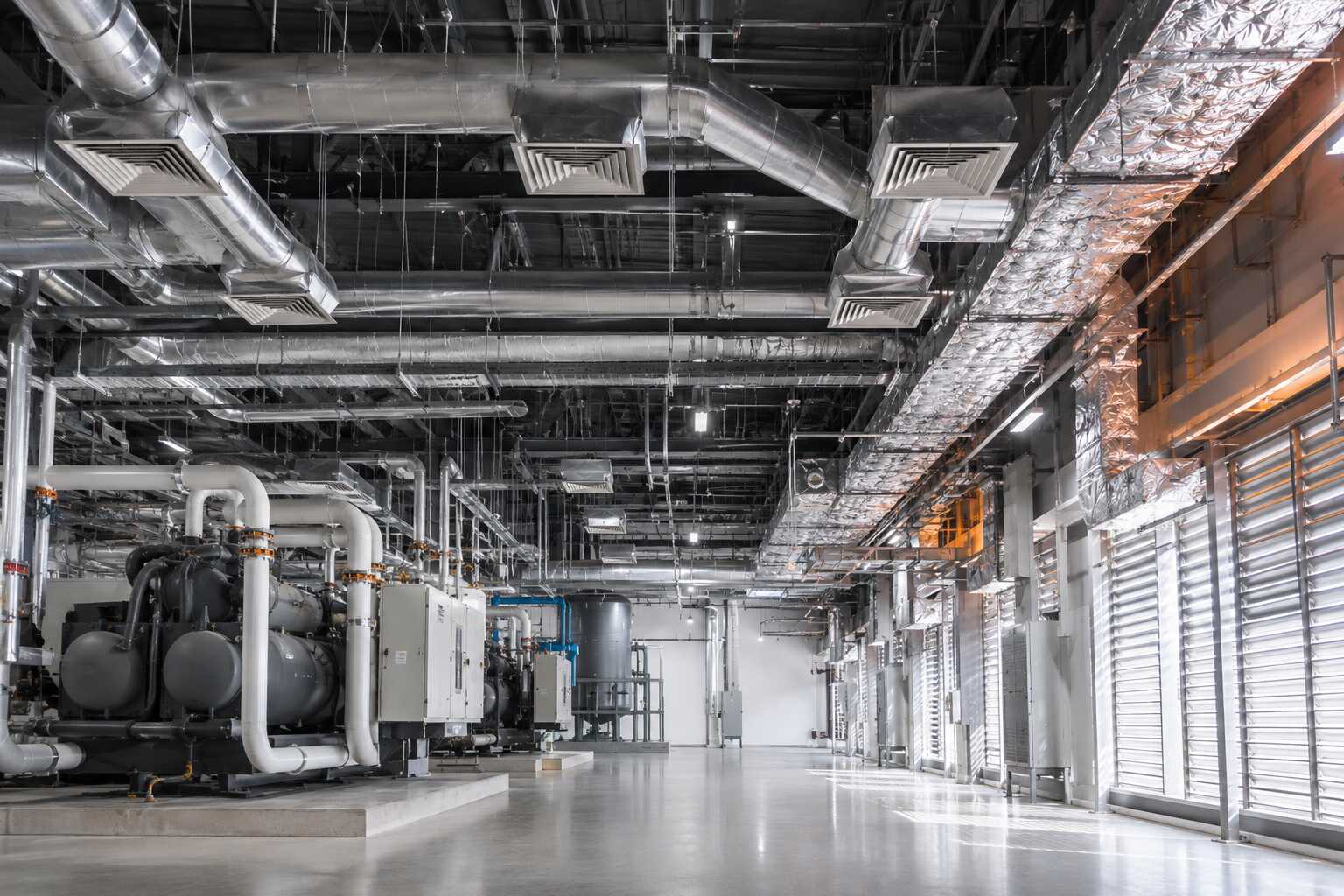
Which areas in large facilities contribute most to cooling efficiency losses?
- Ductwork and air distribution systems
- Chillers, compressors, and cooling coils
- Building envelope and HVAC controls
- High-heat areas like data centers or equipment rooms
Overview
- Large facilities can lose cooling efficiency gradually through air leaks, restricted airflow, equipment wear, heat gain, and poor control settings. These issues often appear as rising energy bills, uneven temperatures, longer equipment runtime, or reduced cooling performance.
- The most common loss points include ductwork and air distribution systems, chillers, compressors, cooling coils, doors, windows, roofs, insulation, thermostats, sensors, and high-heat zones such as data centers or equipment rooms.
- Identifying these problem areas early helps facility managers reduce energy waste, maintain stable indoor conditions, protect critical equipment, and extend the service life of HVAC systems.
Cooling efficiency losses in large facilities usually develop gradually rather than all at once. They often become noticeable through rising energy bills, uneven indoor temperatures, longer equipment runtime, or industrial chillers that no longer perform as efficiently as expected. Over time, these issues can increase operating costs, strain HVAC equipment, and disrupt daily facility operations.
For facility managers and QA/QC supervisors, identifying where these losses occur is essential for maintaining cooling performance and controlling energy use. In this article, we’ll explore the key areas that contribute most to cooling efficiency losses in large facilities and explain why addressing them early helps protect system reliability, comfort, and long-term operational efficiency.
Ductwork and Air Distribution Systems
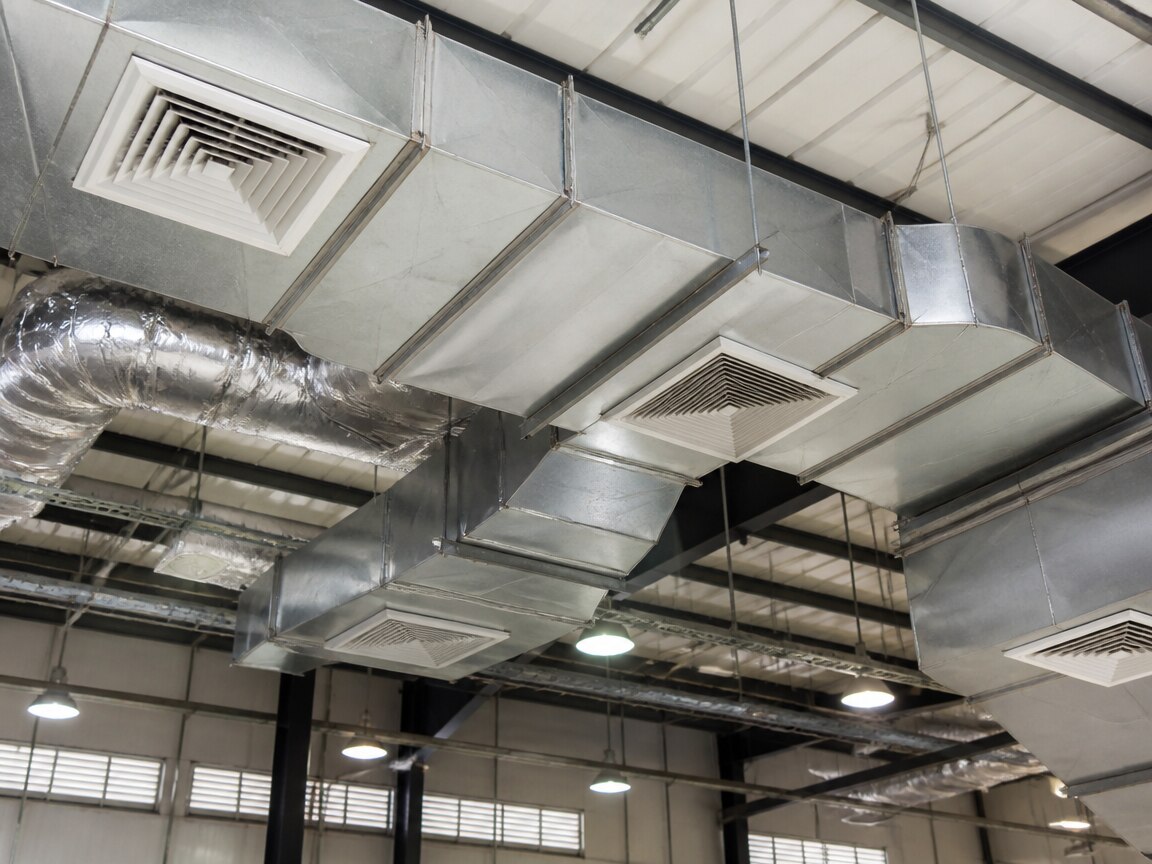
Uneven temperatures across a facility are often one of the first signs of cooling efficiency loss. Some areas may feel warmer or colder than others even when the cooling system is running, which usually means conditioned air is not being distributed properly.
These problems often come from leaky ducts, blocked vents, dirty filters, closed dampers, worn belts, or poorly aligned fans. Over time, these issues reduce airflow, allow cooled air to escape, and force HVAC equipment to work harder to maintain the required indoor temperature.
Unsealed joints, cracks, or gaps in ductwork can also waste conditioned air before it reaches occupied or process-critical areas. Meanwhile, dust buildup, airflow obstructions, and mechanical vibration can reduce fan efficiency and contribute to uneven cooling, higher energy use, and faster equipment wear.
Tips
- Check ducts for holes, gaps, or unsealed joints, especially in ceilings, concealed spaces, and hard-to-access areas. Seal leaks with proper duct mastic or approved foil tape.
- Remove dust buildup from vents, grilles, and dampers, and make sure dampers are open or adjusted according to the facility’s airflow requirements.
- Replace or clean filters every 1 to 3 months, depending on facility conditions, filter type, and manufacturer recommendations.
- Inspect belts, fan components, and motor alignment at least twice a year, or more often in high-load environments, to reduce vibration, friction, and airflow losses.
Chillers, Compressors, and Cooling Coils
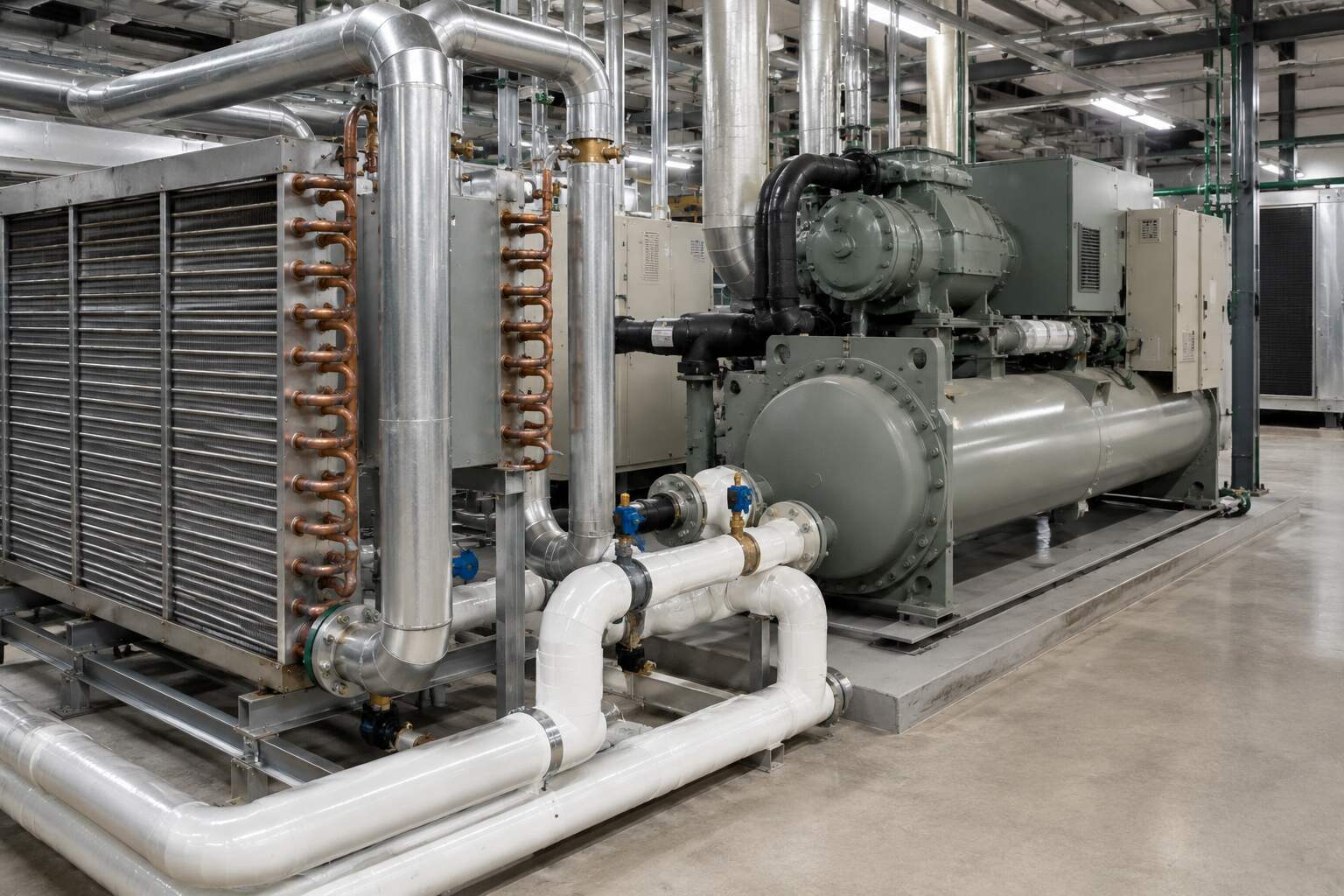
Chillers, compressors, and cooling coils play a central role in overall HVAC efficiency because they are responsible for removing heat from the facility. When these components are dirty, poorly maintained, or operating outside the correct conditions, the system must work harder to deliver the same cooling output.
Dirt, debris, and dust on condenser and evaporator coils reduce heat transfer, forcing compressors to run longer and consume more energy. Incorrect refrigerant levels, refrigerant leaks, or inefficient compressor operation can also reduce cooling performance and increase operating costs.
In water-cooled systems, scale buildup, corrosion, and biofouling can make the problem worse. These deposits create an insulating layer inside heat exchangers, restricting heat transfer and reducing system efficiency over time. Following proper practices for maintaining industrial chillers in the Philippines, such as cleaning coils, monitoring water quality, checking for refrigerant leaks, inspecting electrical components, and tracking operating parameters, helps prevent these losses before they affect facility performance.
Tips
- Clean condenser and evaporator coils regularly, or as recommended by the manufacturer. In dusty, humid, or high-load environments, quarterly cleaning may be appropriate.
- Check refrigerant charge and operating conditions annually, inspect for leaks, repair any leaks found, and recharge only according to manufacturer specifications.
- Inspect and clean water-cooled heat exchangers based on water quality, operating conditions, and manufacturer recommendations. In facilities prone to scale or biofouling, semiannual cleaning may be appropriate.
- Use appropriate water treatment, such as corrosion inhibitors, biocide programs, and scale-control measures, to help prevent scale buildup, corrosion, and biological growth.
Building Envelope and HVAC Controls
The building envelope plays a major role in cooling efficiency because it separates conditioned indoor spaces from outdoor heat and humidity. When doors, windows, roof penetrations, insulation, or seals are poorly maintained, cooled air can escape while outdoor heat and moisture enter the facility.
These issues increase the cooling load and force HVAC equipment to work harder to maintain stable indoor conditions. In the Philippines’ hot and humid climate, even small gaps, poorly sealed openings, damaged insulation, or excessive heat gain through roofs and windows can lead to higher energy use and uneven cooling.
HVAC controls also affect efficiency. Miscalibrated thermostats, poorly placed sensors, or systems without occupancy-based controls may cause overcooling, especially in unoccupied or low-use areas. For newer facilities, choosing the right commercial HVAC solutions for new buildings can also help align system design with building size, layout, climate, energy efficiency goals, and future expansion needs.
Tips
- Inspect windows, doors, roof penetrations, and wall openings annually for gaps, cracks, or worn seals. Seal problem areas with appropriate moisture-resistant sealants.
- Check roof insulation, wall insulation, and weatherstripping for damage, deterioration, or missing sections that may allow heat gain or air leakage.
- Install occupancy sensors, programmable controls, or a building management system (BMS) to reduce unnecessary cooling in idle zones.
- Calibrate thermostats and sensors regularly to avoid overcooling, temperature swings, or inaccurate system operation.
- Train staff to follow approved temperature setpoints based on facility requirements, process needs, and occupant comfort.
High-Heat Areas Like Data Centers or Equipment Rooms
High-heat zones, such as data centers, server rooms, electrical rooms, and equipment rooms, can contribute significantly to cooling efficiency losses. These areas often contain critical equipment that produces continuous heat, requiring stable and well-managed cooling to prevent overheating, downtime, and unnecessary energy use.
In data centers, poor airflow management can cause cold supply air to mix with hot exhaust air. When this happens, hot air may recirculate into equipment intakes, while cold air may bypass the servers and return directly to cooling units without removing heat effectively. This reduces cooling efficiency and can force systems to operate harder than necessary.
Overcooling the entire room to compensate for localized hot spots can also increase energy waste. A better approach is to manage airflow properly, separate hot and cold air paths, and monitor temperature conditions in critical areas.
Tips
- Install blanking panels in empty rack spaces and use brush grommets around cable openings to help prevent chilled air from bypassing servers.
- Follow applicable ASHRAE guidance for data center temperature ranges instead of overcooling the entire room.
- Conduct regular thermal inspections, such as infrared scans, to identify hot spots and airflow issues.
- Review hot-aisle and cold-aisle layouts to improve airflow separation and reduce recirculation.
- Check precision cooling units regularly to ensure they are operating within the required temperature and humidity range.
Bringing These Cooling Losses Under Control
Cooling efficiency losses in large facilities rarely come from one issue alone. They usually develop from several connected problems, such as dirty filters, clogged coils, leaky ductwork, poor insulation, refrigerant leaks, and improperly sized equipment. When these issues are left unresolved, HVAC systems must work harder to deliver the same cooling output, leading to uneven temperatures, higher energy use, and faster equipment wear.
For facility managers and QA/QC supervisors, the most effective approach is to identify these loss points early and treat cooling efficiency as a system-wide concern. Regular inspections, proper maintenance, accurate equipment sizing, and better airflow management can help reduce energy waste while keeping indoor conditions stable.
By addressing these common causes before they escalate, large facilities can improve cooling performance, lower operating costs, and extend the service life of their HVAC systems.
Key Takeaway
Understanding where cooling efficiency losses occur in large facilities is essential for maintaining stable indoor temperatures, reducing energy waste, and protecting critical equipment. From ductwork and air distribution to chillers, building envelope issues, HVAC controls, and high-heat zones, each loss point can affect system performance and operating costs.
Industrial PH provides comprehensive HVAC solutions that help facilities identify problem areas, improve preventive maintenance, and optimize cooling system performance.
Contact us today to schedule a consultation and start improving your facility’s cooling efficiency before small issues become costly problems.