Checklist in Hiring a Steel Tank Fabricator
 July 4, 2026
What should a checklist in hiring a steel tank fabricator include?
- Fabrication Expertise and Relevant Project Experience
- Material Quality and Traceability
- Customization Capabilities and Engineering Support
- Compliance, Testing, and Quality Control Documentation
- Installation Support and After-Sales Service
- Red Flags Before Hiring a Steel Tank Fabricator
Overview
- Steel tanks affect storage reliability, process flow, hygiene, safety, and long-term maintenance costs. A missed specification, weak weld, or incorrect material grade can lead to leaks, rework, downtime, or premature corrosion.
- Procurement officers should not qualify a fabricator by price alone. The stronger approach is to compare fabrication experience, material traceability, engineering support, quality control, installation capability, and after-sales service.
- A reliable fabricator should provide clear drawings, material certificates, inspection records, testing documentation, written scope inclusions, and a practical site support plan before the project moves forward.
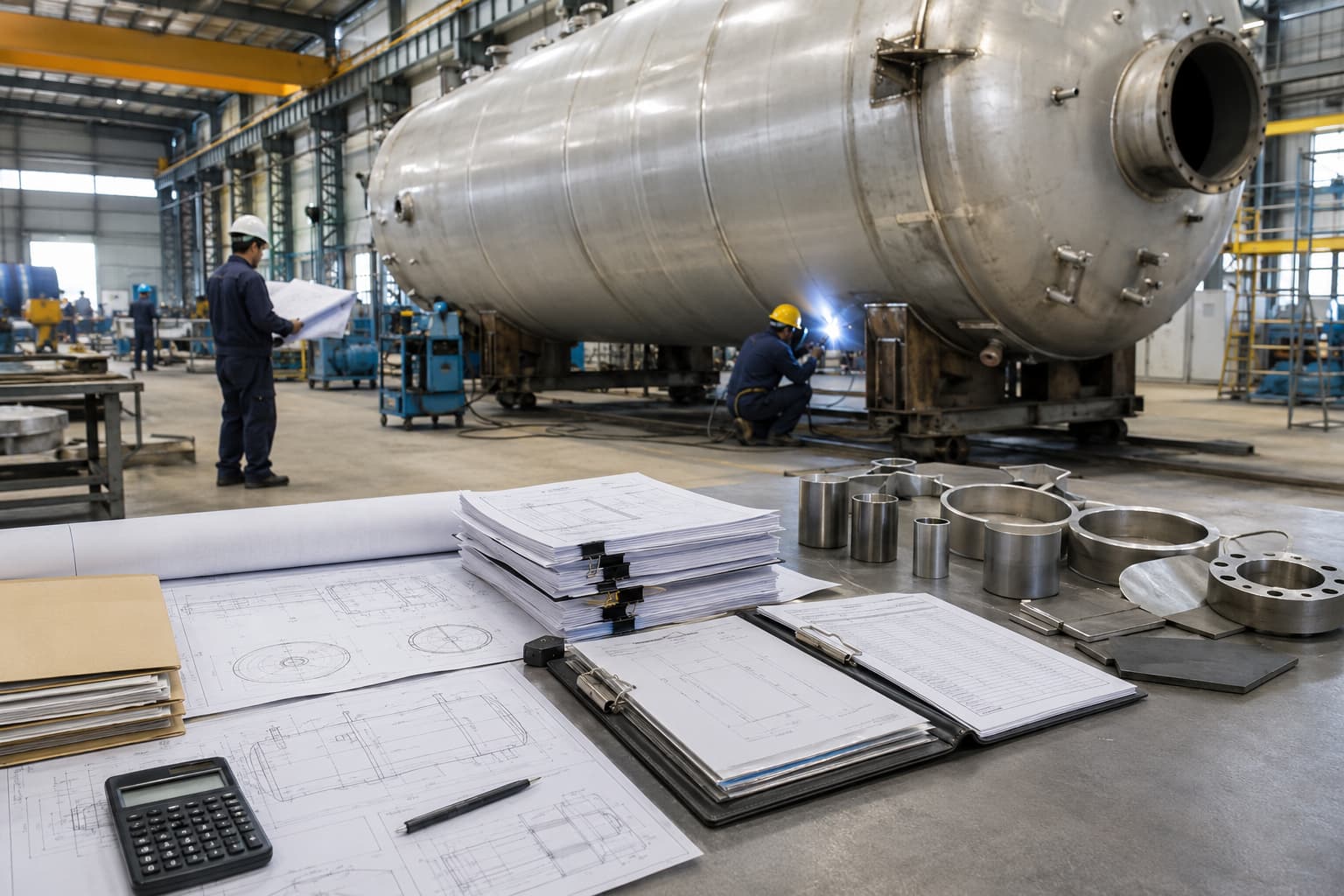
Choosing a steel tank fabricator is a technical procurement decision, not just a purchasing exercise. Unlike general metalwork, steel tank fabrication must account for capacity, material grade, weld quality, corrosion exposure, site access, piping connections, cleaning access, and inspection requirements. The wrong partner can create fit-up issues, delayed commissioning, leaks, maintenance problems, and additional costs that were not visible in the initial quotation.
For procurement officers, a clear checklist in hiring a steel tank fabricator helps separate qualified fabricators from suppliers that only appear competitive on paper. It gives your team a practical way to assess whether the fabricator can meet your operational, technical, and documentation requirements before awarding the project.
This article outlines the key areas to verify before finalizing a fabrication partner, including expertise, materials, customization, compliance, installation support, and after-sales service. For projects that need custom storage or process tanks, Industrial PH’s steel tank fabrication services can help align technical requirements with practical project execution support.
A useful checklist should begin with the tank application. A stainless steel process tank for food and beverage, a carbon steel storage tank for utilities, and a customized tank for industrial processing may require different materials, fittings, surface finishes, inspection steps, and site installation methods.
Before comparing quotations, prepare the required capacity, dimensions, material grade, tank orientation, nozzle schedule, manway locations, operating temperature, cleaning access, coating or finish requirements, and expected delivery timeline. Sending the same information to each bidder helps procurement teams compare proposals fairly and identify suppliers that are vague, incomplete, or technically weak.
The checklist should also confirm whether the fabricator can provide drawings, weld procedures, material certificates, test reports, quality control records, delivery planning, installation methodology, and after-sales support. These details help reduce procurement risk and protect the facility from rework after the tank arrives onsite.
Fabrication Expertise and Relevant Project Experience
Fabrication experience should be relevant to your tank type and operating environment. A fabricator that mainly handles simple water storage tanks may not be the right fit for process tanks that require precise nozzle orientation, sanitary design considerations, internal fittings, or controlled surface finish requirements.
Ask for completed projects similar to your industry, not just general shop photos. Useful proof may include project summaries, tank drawings, fabrication photos, references, delivery records, or examples of tanks built for comparable capacities and site conditions. This is similar to how procurement teams evaluate the attributes of an industrial equipment manufacturer: the supplier should show evidence of capability, not only general claims.
Ask for Similar Project Proof, Not General Metalwork Experience
A supplier may be skilled in structural steel, platforms, or general fabrication but still lack the specific controls required for tank work. Steel tanks demand attention to weld continuity, dimensional accuracy, leak prevention, cleaning access, support design, and connection alignment. Relevant project experience helps reduce the chance of design mismatches and commissioning delays.
Material Quality and Traceability
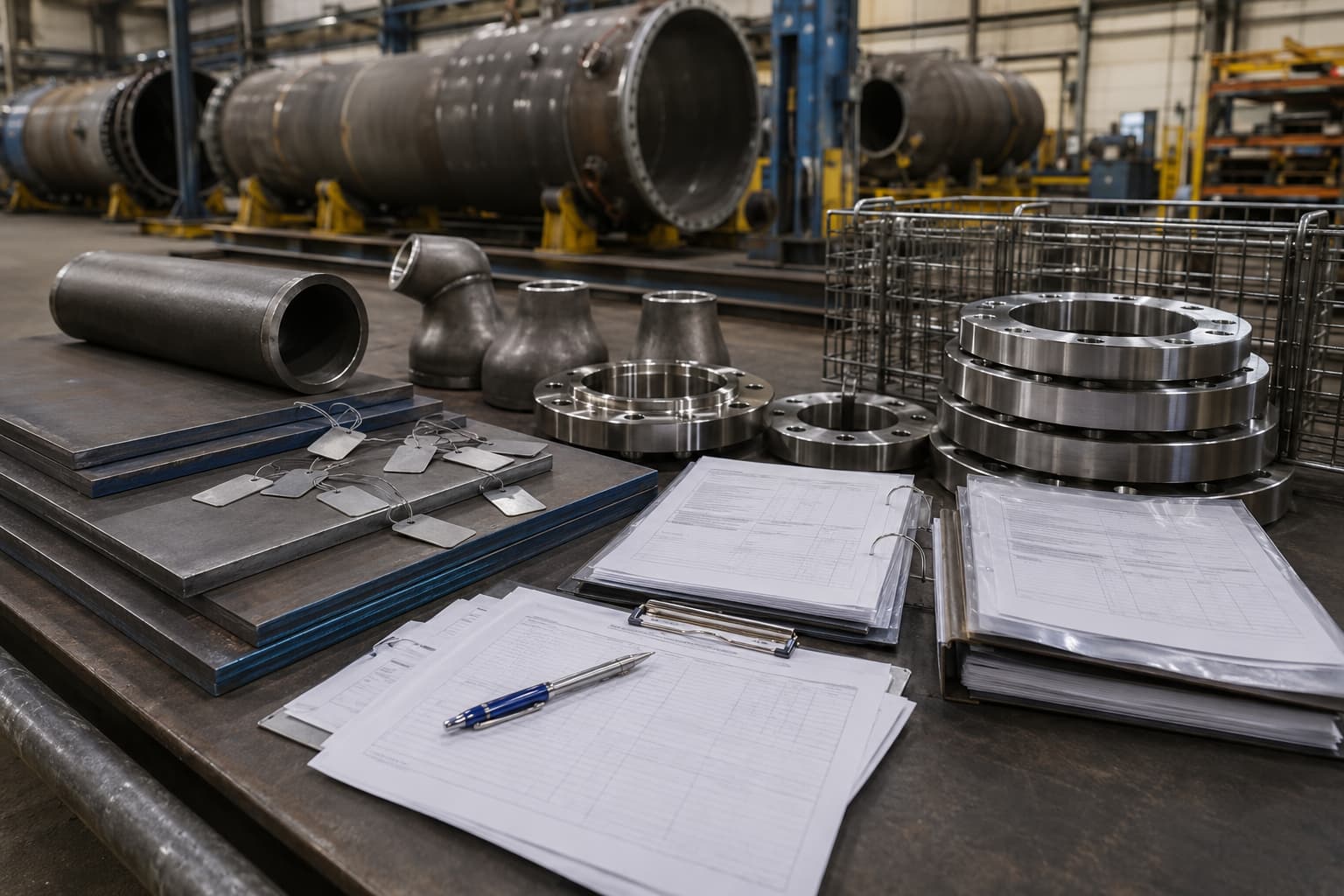
Material quality should be verified before cutting starts. Procurement teams should request mill test certificates for plates, pipes, fittings, and other critical materials. These documents help confirm that the supplied material matches the required grade, thickness, and specification stated in the project scope.
Traceability also matters. The fabricator should be able to show how materials are received, inspected, stored, and assigned to the project. Poor material control can lead to substitution, contamination, corrosion risk, and disputes when the finished tank does not meet the expected standard.
Request Mill Test Certificates and Inspection Hold Points
Ask when the fabricator performs incoming material inspection, fit-up checks, weld inspections, dimensional checks, leak or pressure testing, and final release. These inspection hold points make quality control visible and help your team confirm that issues are caught before the tank is delivered to the facility.
Customization Capabilities and Engineering Support
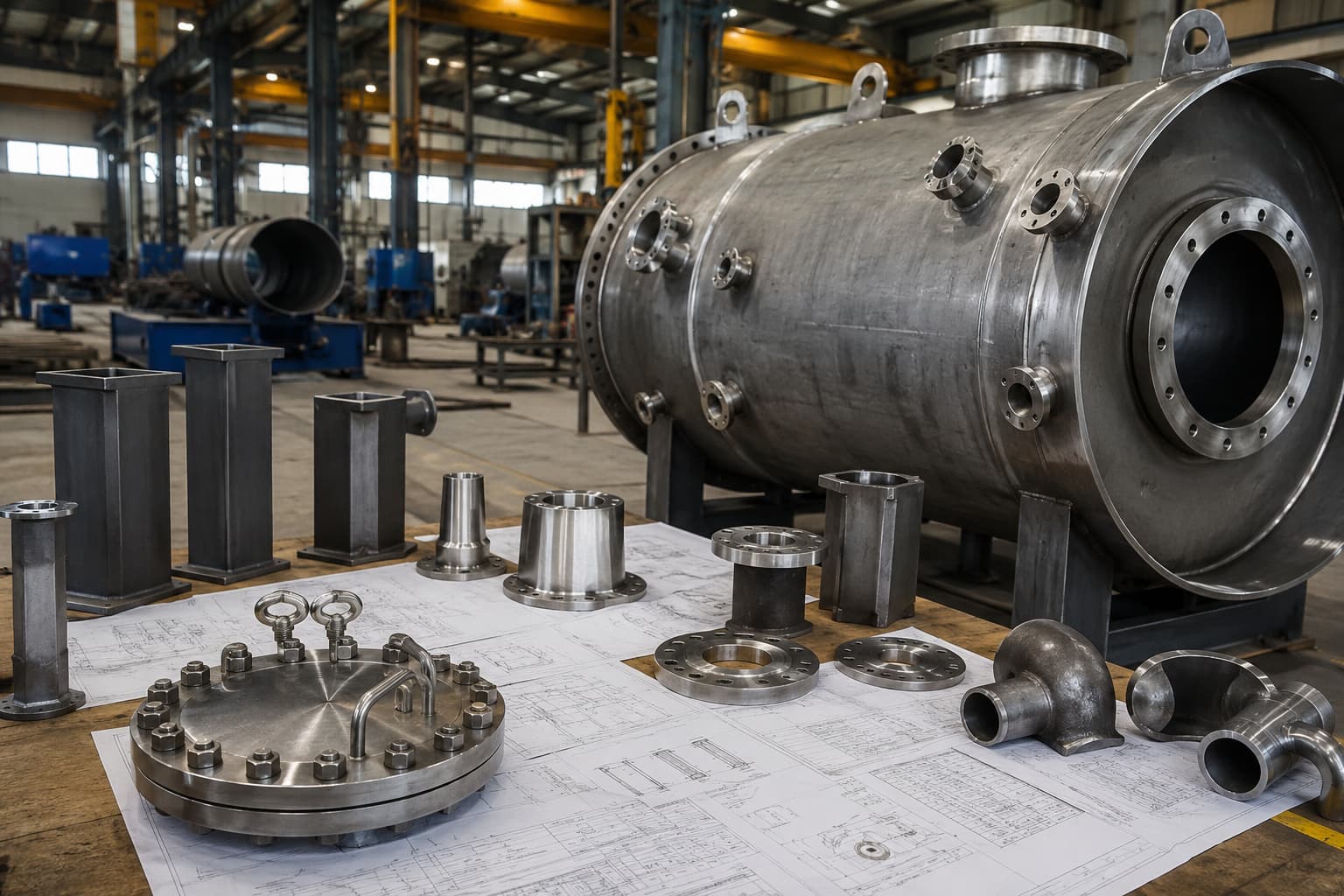
Most industrial tanks are not truly off-the-shelf. Your facility may require specific nozzle orientations, manway sizes, drain locations, clean-in-place access, agitator mounts, internal baffles, level instrument connections, support legs, skid frames, lifting points, or ladder and platform provisions. A qualified fabricator should be able to review these requirements and translate them into practical fabrication drawings.
Engineering responsiveness is important during procurement. If a fabricator cannot explain how they will handle your layout, site access, piping connections, or installation constraints during the bidding stage, those issues may become more expensive once fabrication is already underway.
Submit Your Tank Data Early to Test Responsiveness
Send each fabricator the same tank data sheet, sketches, process requirements, and expected site conditions. Compare how clearly they respond. A strong fabricator will ask useful technical questions, flag unclear specifications, and provide practical recommendations instead of simply quoting a generic tank size.
Compliance, Testing, and Quality Control Documentation
Compliance should be documented, not assumed. Depending on the application, your facility may require material certificates, welding procedure records, welder qualification records, dimensional inspection reports, coating or surface finish checks, hydrostatic testing, leak testing, or other project-specific verification records.
The goal is to confirm that the tank meets the requirements of your facility, client, industry, and project specification. Avoid accepting generic statements such as “standard fabrication” or “compliant materials” without seeing the actual verification method and acceptance criteria.
Request a Compliance Matrix for Clear Verification
A compliance matrix is a simple table that lists each requirement alongside the fabricator’s proposed verification method, responsible party, timing, and acceptance criteria. This makes it easier for procurement, engineering, and operations teams to review the supplier’s capability before issuing a purchase order.
Installation Support and After-Sales Service
A well-fabricated tank can still create problems if installation is poorly planned. Confirm who is responsible for delivery coordination, unloading, lifting support, foundation readiness, alignment, field welding, pipe tie-ins, site safety requirements, testing after installation, and final turnover documentation. These details should be treated with the same discipline used for machinery installation contract terms because unclear scope can lead to delays, extra costs, and responsibility gaps.
After-sales service is equally important. Tanks may require inspection, repair, modification, gasket replacement, accessory adjustments, or technical support after commissioning. If the project also involves process lines, utility connections, or pipe tie-ins, coordinated industrial piping contractor support helps prevent alignment issues between the tank and the surrounding system.
Clarify Site Work Before Awarding the Project
Ask whether the same quality standards used in the fabrication shop also apply to site welding, installation, and final testing. If field work is subcontracted, verify who supervises the work and who remains accountable for workmanship, documentation, and warranty concerns.
Red Flags Before Hiring a Steel Tank Fabricator
Even when a supplier offers an attractive price, certain warning signs may indicate higher risk. Procurement officers should review these issues before finalizing the contract:
- The proposal does not include drawings, material details, testing requirements, or clear scope inclusions.
- The fabricator cannot show similar tank projects for your industry or operating conditions.
- Material grades, mill certificates, coating requirements, or surface finish requirements are vague or missing.
- There is no documented inspection and testing plan before delivery.
- The supplier cannot explain how site access, unloading, installation, or field welding will be handled.
- After-sales service, warranty terms, maintenance support, and responsibility for future repairs are not clearly stated in writing.
Key Takeaway
A disciplined checklist in hiring a steel tank fabricator helps procurement teams avoid hidden costs, weak documentation, poor material control, installation issues, and long-term maintenance risks. Before awarding a project, verify relevant fabrication experience, material traceability, customization capability, compliance documentation, installation support, and after-sales service.
Industrial PH supports Philippine industrial facilities with steel tank fabrication, installation coordination, and technical project support. Contact us today to discuss your tank requirements, site conditions, and next project steps before finalizing your procurement decision.