How to Specify FRP Wall and Ceiling Panels for Your Facility
 March 16, 2026

How to specify FRP wall and ceiling panels for your facility?
- Assess the environment and intended application
- Define required performance and safety standards
- Evaluate hygiene needs and cleaning requirements
- Select the appropriate material type and surface finish
- Confirm installation methods and site requirements
Overview
- Fiberglass Reinforced Plastic (FRP) wall and ceiling panels offer durable, low-maintenance, and hygienic solutions that are ideal for facilities in humid climates like the Philippines.
- Selecting the right panels requires evaluating environmental conditions, performance standards, hygiene needs, material type, and proper installation methods to ensure long-term functionality and compliance.
- By understanding how to specify FRP panels, facilities can maintain strict hygiene standards, operational efficiency, and durable, reliable wall and ceiling systems.
Fiberglass Reinforced Plastic (FRP) wall and ceiling panels provide long-lasting, low-maintenance solutions that combine durability and hygiene—perfect for facilities like food processing areas, hospitals, and pharmaceutical warehouses in the humid Philippine climate.
Knowing how to specify these panels helps your facility meet applicable local standards, including the Food Safety Act of 2013 and the Bureau of Fire Protection (BFP) regulations, while supporting operational efficiency and safety.
To make informed decisions when sourcing materials, here’s a practical guide on how to specify FRP wall and ceiling panels for your facility, helping you select panels that align with both compliance and long-term performance.
Assess the Environment and Intended Application
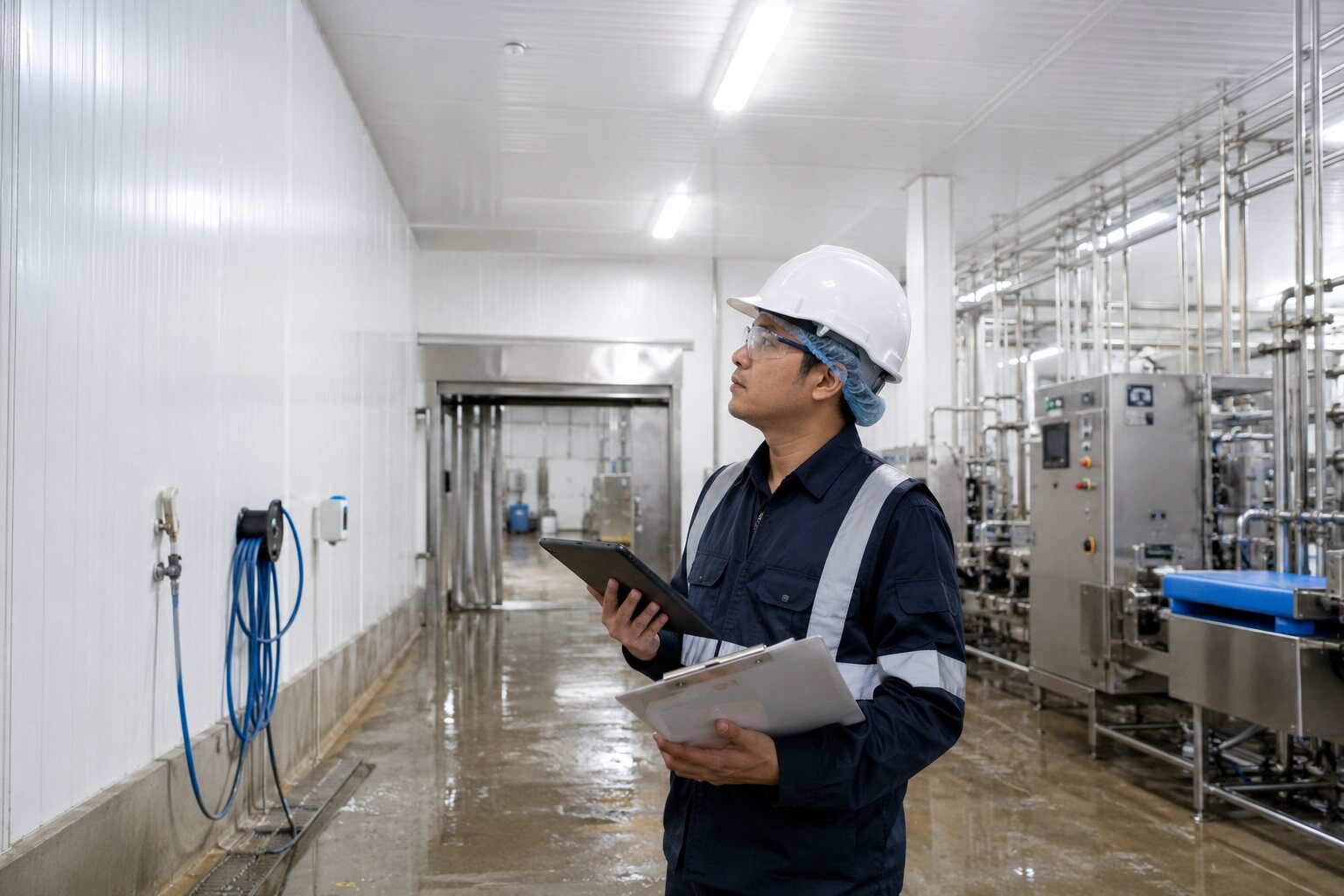
Before specifying FRP panels, evaluating the conditions and purpose of the area where they will be installed helps ensure long-term performance. By understanding your facility’s operational environment, you can select materials that withstand daily challenges, comply with hygiene or safety standards, and reduce future maintenance needs.
Moisture and Temperature
High humidity and fluctuating temperatures in the Philippines can impact the longevity of wall and ceiling panels. Cladding solutions rated for moisture-prone areas, such as food processing rooms, hospitals, or laboratories, provide resistance to warping and degradation, helping keep walls and ceilings reliable under changing conditions.
Chemical Exposure
Facilities that use cleaning agents, processing fluids, or other chemicals require panels that can handle potential exposure. Verifying that specific hygienic wall systems are compatible with the substances used in your environment helps maintain durability, operational safety, and consistent performance over time.
Define Required Performance and Safety Standards
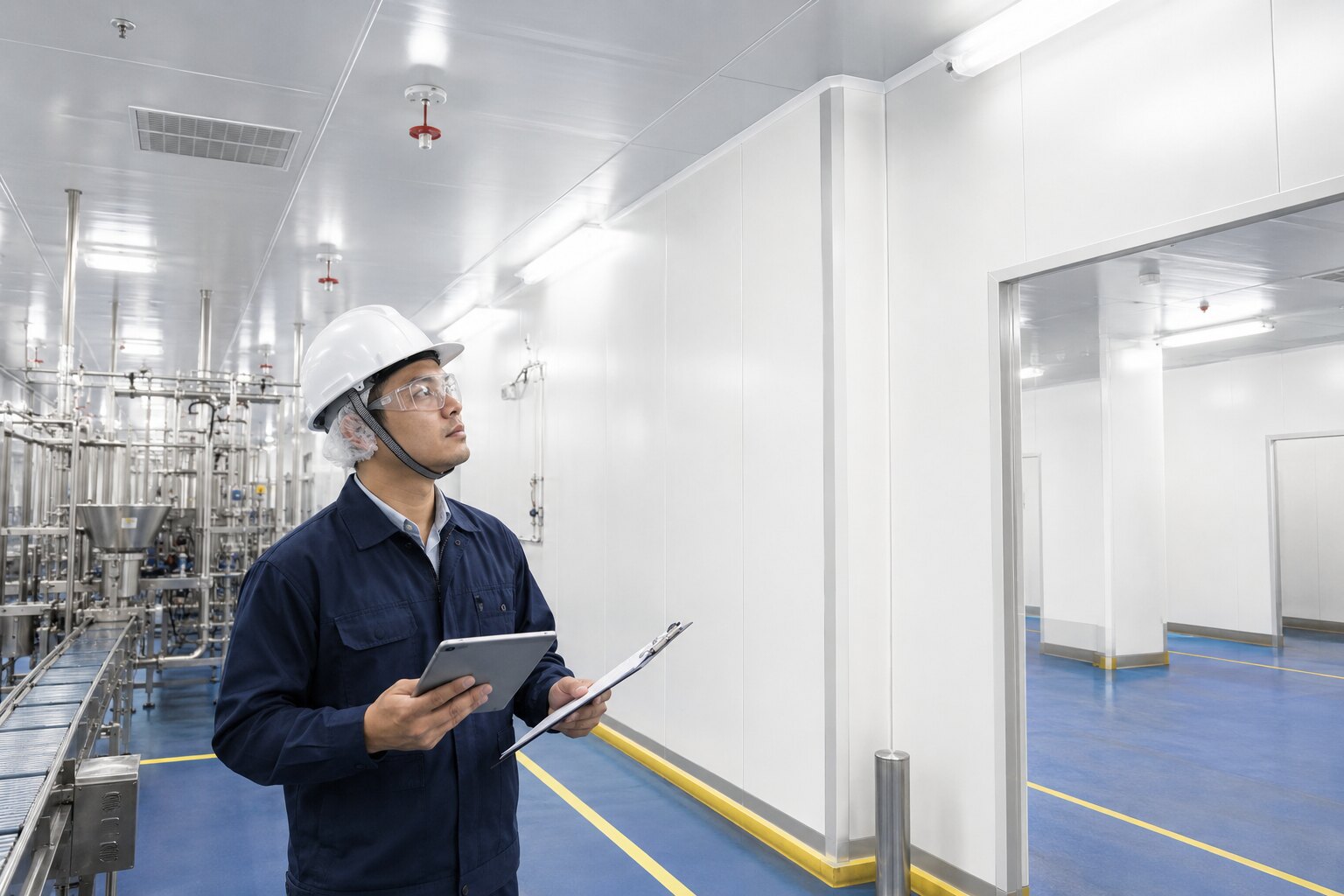
When specifying FRP panels, understanding the performance and safety requirements for your facility helps align your choices with both operational needs and regulatory compliance. Having clear standards reduces the risk of maintenance issues and ensures that panels perform reliably over time.
Fire Rating
Selecting materials with appropriate fire ratings reduces risks to both personnel and property. Class A-rated modular wall panels, with low flame spread and limited smoke development, are particularly suited for areas where strict fire regulations must be followed, supporting a safer, more compliant environment.
Impact Resistance
Panels in high-traffic or equipment-heavy areas must withstand everyday operational impacts. Impact-resistant protective wall surfaces help prevent dents or surface damage, maintaining both the appearance and durability of walls and ceilings while reducing repair needs over time.
Evaluate Hygiene Needs and Cleaning Requirements
Understanding the hygiene and cleaning demands of your facility ensures that FRP panels support both operational standards and regulatory compliance. By addressing these needs before specifying materials, you can reduce contamination risks and simplify routine maintenance.
Non-Porous Surface
Non-porous wall and ceiling panels help resist bacteria, mold, and other microbial growth, making them suitable for hospitals, food processing plants, and laboratories. Panels certified for hygienic use ensure effective cleaning and sanitization, supporting a safer and more compliant environment.
Seamless Integration
Reducing joints and seams minimizes areas where dirt, moisture, or bacteria can accumulate. Seamless cladding solutions improve hygiene, streamline cleaning, and support consistent operational safety throughout the facility.
Select the Appropriate Material Type and Surface Finish
Choosing the right material type and surface finish ensures that FRP panels meet both the functional and aesthetic requirements of your facility. Careful consideration of these factors helps maintain durability, hygiene, and operational efficiency while aligning with the facility’s design and workflow needs.
Thickness
The thickness of these modular wall panels affects durability and resistance to wear. For high-traffic or equipment-intensive areas, thicker surfaces provide added protection, and consulting with manufacturers ensures you select the right specification for long-term performance and operational efficiency.
Finish and Surface Texture
Surface finish influences both cleanliness and usability. Smooth finishes facilitate easy cleaning, while textured finishes may provide additional grip or resistance where needed. Selecting a finish that matches your facility’s operational and safety requirements helps maintain hygiene and functionality over time.
Confirm Installation Methods and Site Requirements
Ensuring proper installation and accounting for site-specific conditions are crucial to making sure your FRP panels perform as intended. By planning installation methods in advance, you can prevent moisture, structural, or alignment issues, supporting materials that perform reliably under operational and environmental stresses.
Seams and Trim
Correct handling of seams and trim preserves the integrity and durability of wall and ceiling systems. Following recommended installation practices minimizes moisture infiltration and helps maintain walls and ceilings that are both hygienic and structurally sound over time.
Expansion Gaps
Accounting for expansion and contraction caused by temperature and humidity fluctuations prevents warping or buckling. Collaborating with your installation team to establish proper spacing ensures the panels remain stable and maintain their performance despite environmental changes.
Partner with Industrial PH for FRP Wall and Ceiling Solutions
At Industrial PH, we provide the guidance and support you need when selecting the most suitable FRP wall and ceiling panels for your facility. By helping you evaluate materials, installation best practices, and compliance with local regulations, we help ensure that your specifications support long-term durability, operational efficiency, and hygiene requirements.
As an authorized distributor of FRP solutions from Valto Engineered Materials, we offer access to top-grade hygienic panel systems and responsive technical support. By working closely with your team throughout the planning and installation process, we help ensure that your walls and ceilings meet strict hygiene standards while maintaining reliable performance, long-term durability, and consistent functionality.
Key Takeaway
By understanding how to specify FRP wall and ceiling panels for your facility, you can now make informed decisions that ensure long-term durability, maintain strict hygiene standards, and support safe, efficient, and compliant operations throughout your facility.
To ensure long-lasting, efficient, and low-maintenance facilities, trust Industrial PH, a leading provider of FRP wall and ceiling panels with 25 years of experience in the Philippines. Contact us today for a consultation on specifying the right panels for your project.