What Does a Compliance-Ready Fire Alarm Design Look Like?
 April 25, 2026

Overview
- A compliance-ready fire alarm design ensures that system type, fire detection device placement, notification devices, power supply, backup power, and monitoring are aligned with fire code requirements in the Philippines.
- This article highlights how early design decisions help reduce approval issues, minimize revisions during inspection, and improve overall safety performance.
BFP approval is often associated with inspections, documentation, and final validation before a fire alarm system is cleared for use. However, many approval issues do not begin at the inspection stage. They are often created much earlier during the design process, where decisions about system layout, device placement, code requirements, and documentation are first made.
A compliance-ready fire alarm design ensures that system layouts, device placement, and technical requirements are already aligned with fire code regulations before installation even begins. Such an approach helps reduce design conflicts, minimizes the need for revisions during inspection, and supports a smoother approval process.
More importantly, it shifts compliance from being something checked at the end into something intentionally built into the design from the very beginning.
Correct System Type Selection
Before a fire alarm system is designed, the building’s size, layout, and purpose must first be evaluated, as these will determine the most suitable system type.
For small or simpler buildings, a conventional fire alarm system is often sufficient. It divides the building into zones, so when an alarm is triggered, the system identifies the general area where the incident occurred. This setup works well for basic layouts where exact device-level location is not as critical.
For larger or more complex buildings, providers like Industrial PH implement addressable systems suited for this level of complexity. In this setup, each device has its own unique identity, allowing the system to pinpoint the exact location of the alarm within the building.
Strategic Fire Detection Device Placement

In fire alarm design, strategic device placement goes beyond simply mapping where equipment will be installed. Airflow from air-conditioning systems, ceiling height, and how people move through rooms all affect how well a fire alarm system works in real situations.
In practice, smoke detectors, heat detectors, and manual call points should be placed where they can work effectively without obstruction or interference from their surroundings.
Smoke detectors are typically installed on ceilings, often near the center of a room, or slightly lower if wall-mounted. Heat detectors, on the other hand, are placed in areas such as kitchens or equipment rooms but kept away from direct heat sources to prevent unnecessary alarms.
Meanwhile, manual call points are installed along exit routes so they are easy to see and reach during emergencies.
Proper Notification Devices
Different areas of a building have varying noise levels and visibility conditions. Because of this, fire alarm design must ensure that emergency alerts are clearly heard and seen across all occupied areas of the building.
Notification devices such as horns and strobes are used to achieve this. Horns are designed to be louder than the surrounding noise so they can still be clearly heard during emergencies.
Strobes, on the other hand, provide visual alerts through flashing lights, helping people notice alarms even if they cannot hear them.
At Industrial PH, these notification devices are integrated into our fire alarm systems to ensure audible and visual alerts remain effective across different facility layouts, occupancy levels, and risk areas.
Available Backup Power
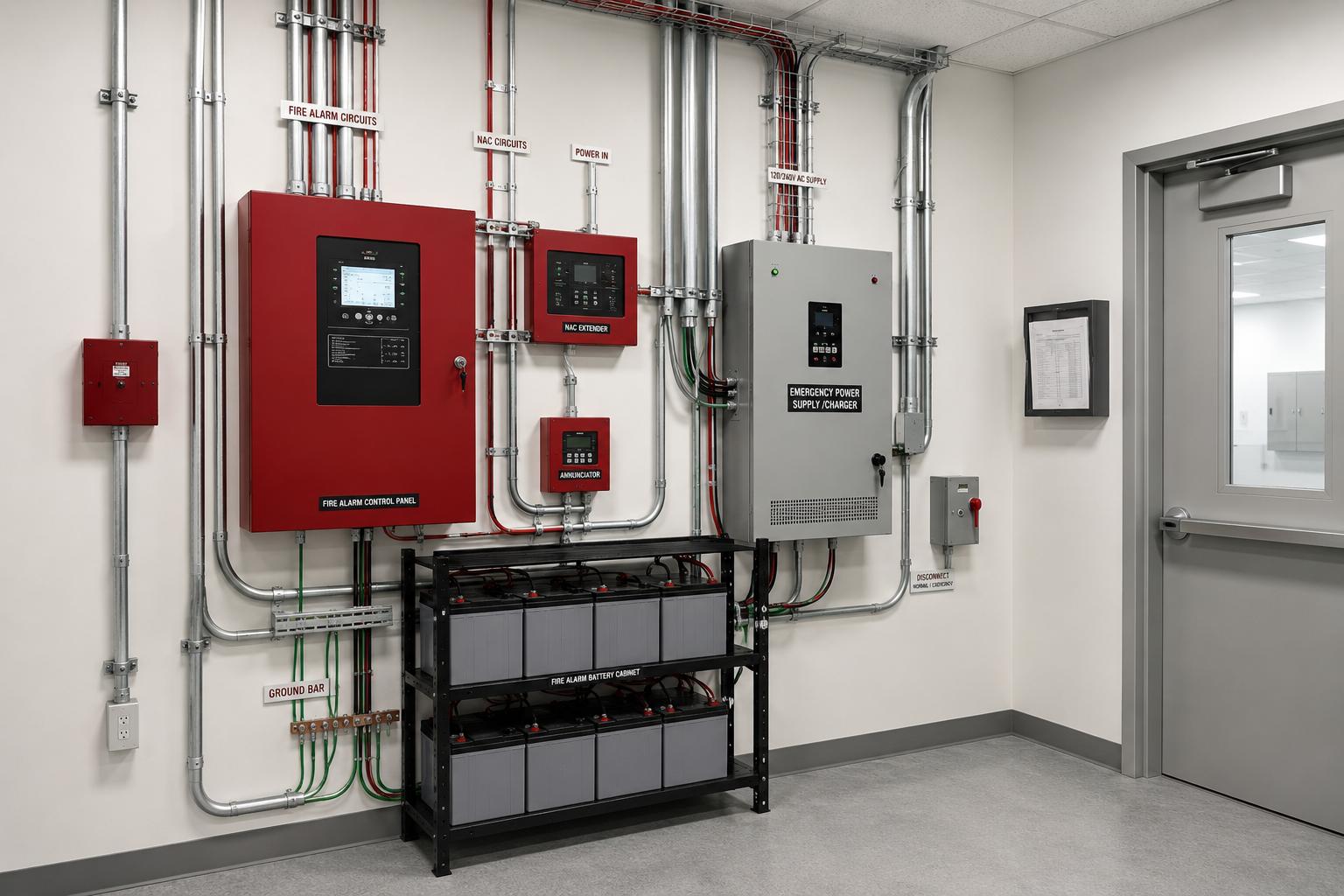
Fire alarm systems need to keep working even when the building suddenly loses power. This is a key requirement under the Philippine Fire Code (RA 9514) and NFPA 72 standards.
This matters most during situations where the fire alarm system cannot rely on normal building power. For example, if a commercial building experiences a sudden power outage, the system still needs backup power so occupants can be alerted if a fire occurs. In an industrial facility, power interruptions caused by equipment overloads or electrical faults can happen without warning, so the fire alarm system must remain active even when the main power supply is disrupted.
To make this possible, fire alarm systems are designed with backup batteries that automatically take over when the main power supply fails. This ensures that detection and alarms continue working without interruption.
Monitoring System Installed
A compliance-ready fire alarm design particularly includes how the system will be observed, checked, and maintained after installation. This is an important part of ensuring that the system continues to function properly throughout its service life.
Through proper monitoring, early signs of device malfunctions, wiring faults, communication errors, or irregular system behavior can be identified. They may seem minor at first, but if left unnoticed, they may affect system performance when it is needed most.
With effective monitoring in place, maintenance teams can address these concerns early, helping reduce risks.
Key Takeaway
Proper fire alarm system planning from the start helps improve safety, reduce delays, and ensure compliance with fire code requirements.
At Industrial PH, we provide high-quality fire alarm systems along with design and consultancy services to help ensure the right layout for your building. We also handle installation and guide your team on proper system use for long-term reliability.
To secure your facility, you may contact us today!