What are the Common Fire Detection System Blind Spots in Large Facilities?
 April 16, 2026
Overview
- Fire detection system blind spots can compromise safety, delay alerts, and increase the risk of fire escalation.
- These gaps often stem from overlooked design limitations such as obstructions, high ceilings, airflow interference, and improper detector placement.
- With the right strategies and solutions from Industrial PH, facilities can strengthen detection coverage, improve compliance, and ensure faster, more reliable fire response.
Fire detection system blind spots in large facilities can delay alerts and escalate risks if left unaddressed.
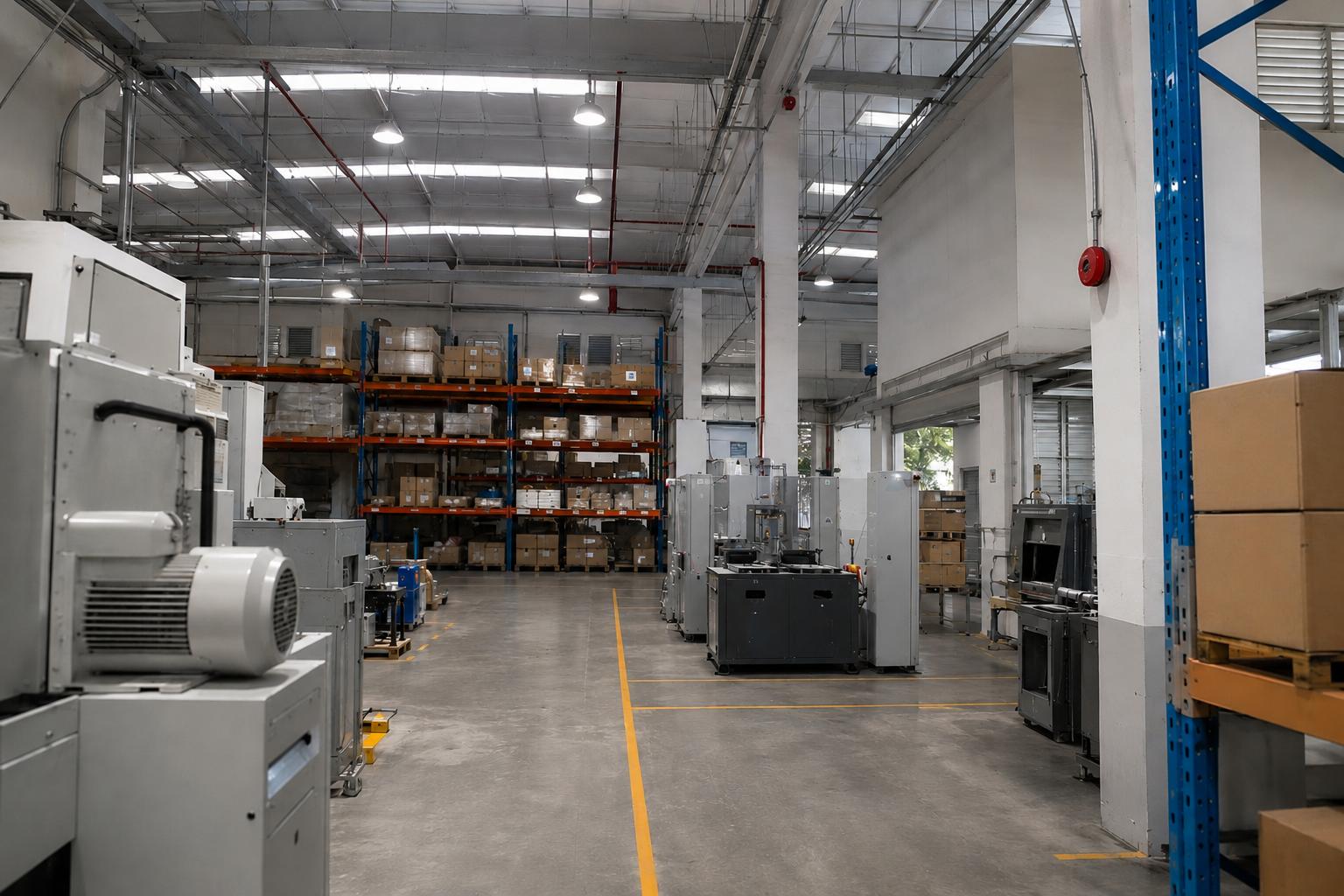
Areas such as overlooked corners, high ceilings, or spaces obstructed by machinery or storage racks may allow a small fire to go undetected until it becomes a major hazard. This, in turn, affects both personnel safety and operational continuity.
Understanding where fire detection systems commonly fall short allows you to implement targeted measures, strengthen coverage, and ensure that both employees and assets are fully protected.
Physical Obstructions
Physical obstructions such as storage racks, large vessels, and heavy machinery can create blind spots in fire detection systems. They particularly affect flame detectors by blocking the required line-of-sight, since these detectors rely on direct visibility rather than smoke diffusion.
To mitigate these blind spots, detectors can be strategically placed above obstructions or mounted on elevated platforms to ensure broad coverage. In complex layouts, integrating multiple detectors may be necessary to eliminate hidden zones.
High-Ceiling Facilities
 High ceilings, common in warehouses and atriums, make smoke detection more difficult because rising smoke can spread out, cool down, or stay below ceiling-mounted detectors.
In spaces over 12 meters high, smoke can form layers below detectors, and air currents from HVAC systems, doors, or ongoing operations can further disperse it.
This is why using Industrial PH’s aspirating smoke detection (ASD) systems, which actively sample air from multiple low points, can provide earlier warnings and improve safety in high-ceiling areas.
Hidden Voids
Crawlspaces, mezzanines, and false ceilings can create serious blind spots for fire detection systems. Spaces above dropped ceilings or below raised floors are often overlooked during installations, creating undetected paths where fire can spread unchecked.
Standards like BS 5839-1 recommend installing detection in voids over 800mm deep unless a low fire risk can be demonstrated.
To ensure complete coverage and reduce the risk of delayed alerts, using specialized detectors or air sampling systems in these areas is essential.
Airflow Interference
Strong ventilation or HVAC systems in facilities can divert smoke plumes away from fixed detectors. As a result, alarm activation may be delayed, allowing fires to intensify undetected.
Detectors can be positioned upstream of airflow paths, or duct-mounted sensors can be integrated with HVAC shutdown relays to help prevent smoke from bypassing alarms and ensure faster fire detection.
Improper Spacing
If detectors are too far apart, installed too low, or misaligned, they may fail to provide timely alerts, leaving portions of a facility unmonitored and delaying fire detection.
Proper spacing is essential to ensure complete coverage and faster response times.
Following NFPA 72 guidelines, smoke detectors on smooth ceilings should be spaced a maximum of 30 feet (9.1 m) apart. Detectors should also be within 15 feet of walls, ensuring that every point in the room is within 21 feet (0.7× spacing).
Technology-Specific Limitations
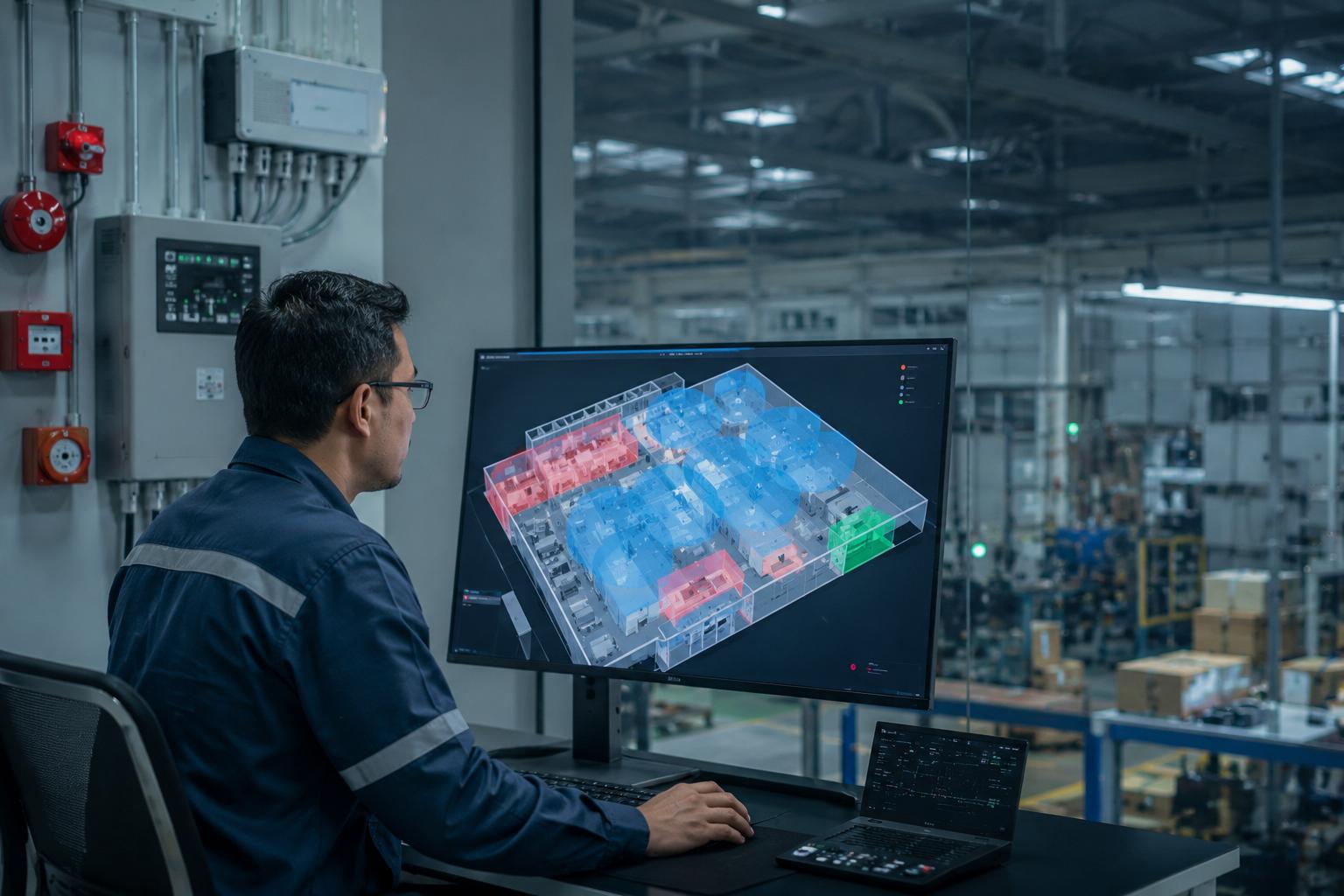 Fire detection systems rely on a variety of technologies, each with its own strengths and limitations. Flame detectors, smoke detectors, and thermal cameras are widely used in industrial facilities. However, factors such as obstructions, airflow, ambient conditions, and detector placement can reduce their effectiveness.
Flame Detectors
Flame detectors are optical systems that require an unobstructed line-of-sight to flames within their field of view. They can fail if blocked by racks, vessels, or piping, so strategic placement of multiple units is essential for full coverage.
Smoke Detectors
Point or spot smoke detectors are effective for detecting slow-smoldering fires, but they can struggle in large open spaces. Using performance-based modeling, proper placement, and supplemental systems such as aspirating smoke detectors (ASD) can improve coverage in these challenging environments.
Thermal Cameras
They excel at identifying larger heat sources and may miss very early-stage or low-heat smoldering fires that lack distinct hotspots. Ensuring proper camera angles, regular calibration, and integration with other technologies helps maintain reliable monitoring and rapid emergency response.
Solutions and Mitigation Strategies
Identifying fire detection system blind spots in facilities is only the first step. Closing these gaps requires a practical approach that combines proper system design, the right detection technologies, and regular inspections to ensure reliable coverage across large facilities.
- Coverage Mapping: Use 3D simulation tools to assess line-of-sight, obstructions, and scenario-based coverage before installation.
- Specialized Detection: Deploy targeted detection systems based on specific risk areas.
- Aspirating Systems: Aspirating smoke detection (ASD) systems actively sample air from multiple points, including blind spots, high ceilings, and high-airflow areas, to detect smoke earlier.
- Video Analytics: AI-driven video analytics enhance fire detection by analyzing smoke and flame patterns in real time across wide areas.
- Regular Inspections: Routine inspections, along with quarterly visual and functional checks, help verify proper detector spacing, ensure sensors remain clean, and identify any coverage gaps.
Key Takeaway
Fires can spread faster than anyone anticipates, and gaps in detection systems only make them more dangerous.
Taking a proactive approach to identifying and eliminating blind spots not only protects employees but also safeguards your assets and keeps operations running smoothly.
Take the next step today and contact Industrial PH to assess your current setup and ensure your facility is fully covered.